
 Climate Change
UNEP's Emissions Gap Report 2026 says the chance of holding warming to 1.5°C with no or limited overshoot is gone. The goal now is to keep the overshoot as small and short as possible, which means cutting emissions 18 percent by 2030 against 2025 levels. Current national pledges would deliver 5 to 8 percent.
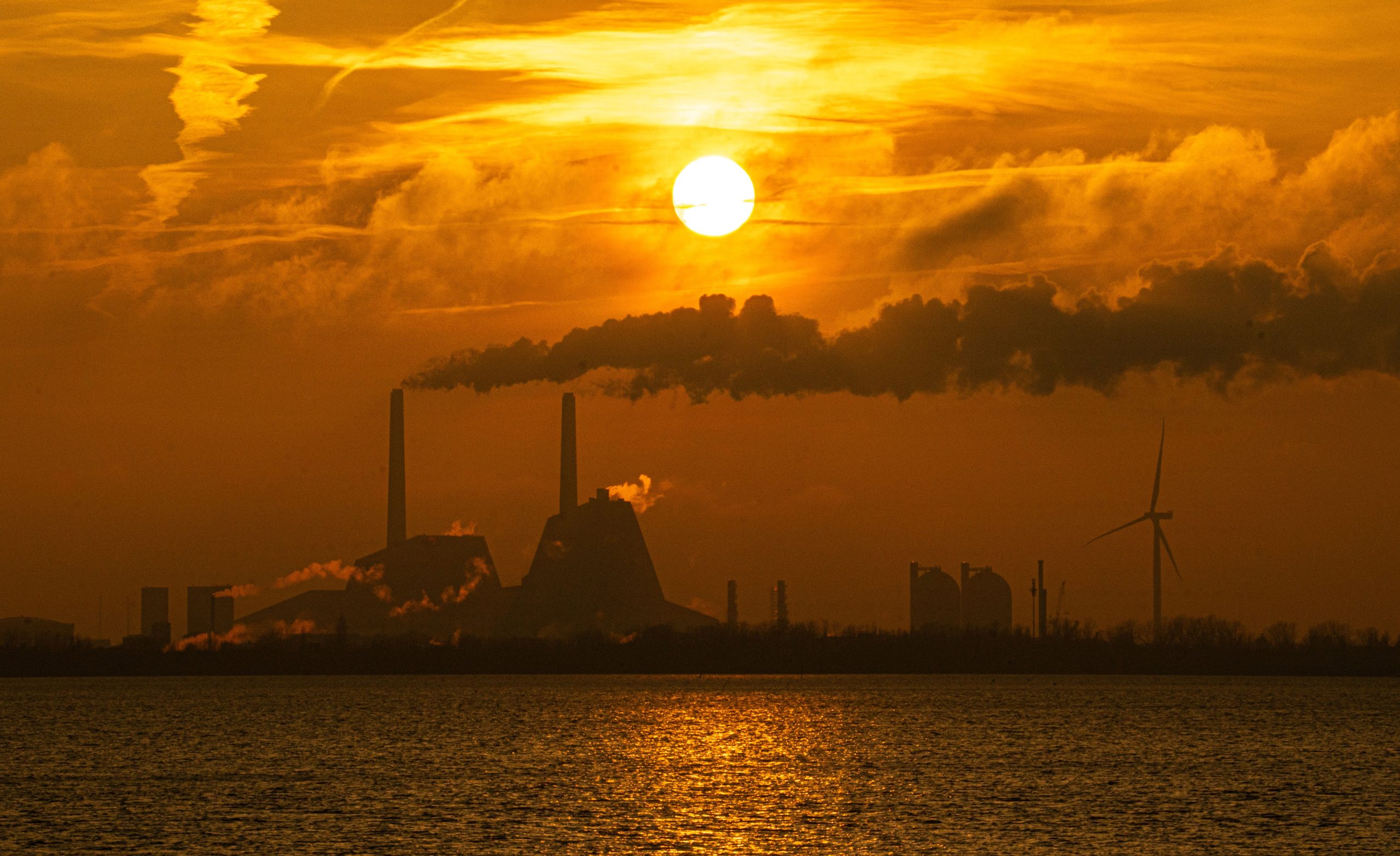
On 21 October, the UN Environment Programme published its Emissions Gap Report 2026, titled ‘The Point of Return’, weeks before COP31 opens in Antalya. Its headline finding is blunt- the chance of holding global warming to 1.5°C with no or limited overshoot is now gone.
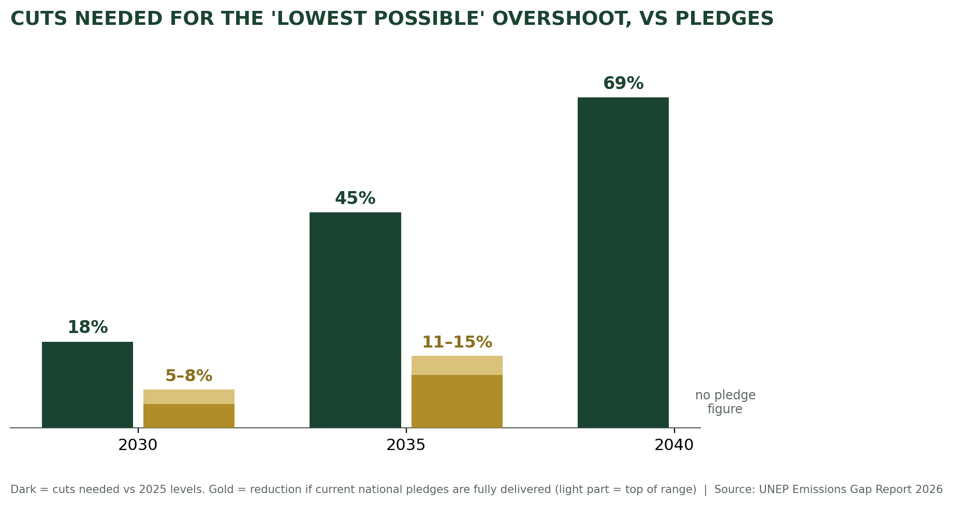
Required cuts for the ‘lowest possible’ 1.5°C overshoot scenario against reductions if current pledges are fully delivered, from UNEP’s Emissions Gap Report 2026.
The report does not give up on the target. It sets out a ‘lowest possible’ overshoot scenario in which peak warming is limited to 1.7 to 1.8°C around the middle of the century, and temperatures return to 1.5°C or below by 2100, with about a 50 percent chance. Getting there would require global greenhouse gas emissions to fall 18 percent by 2030, 45 percent by 2035 and 69 percent by 2040, all compared with 2025. UN Secretary-General António Guterres put it as almost 6 percent a year.
The gap between that path and the promises on the table is wide. Even if every country fully delivers its current national pledge, emissions would fall only 5 to 8 percent by 2030 and 11 to 15 percent by 2035. Fewer than half of the G20 economies are on track to meet their existing 2030 targets. UNEP also estimates that about 320 gigatons of CO2 would need to be removed from the atmosphere by the end of the century, equal to roughly eight times the emissions recorded in 2024.
Delay carries a price. According to the report, every five years in which CO2 emissions stay at current levels adds about another 0.1°C to peak warming.
Guterres insisted that overshoot is not surrender, and that the world can still keep it as small and short as possible. UNEP’s executive director, Inger Andersen, said the point of return begins now, not later.
What does this mean in practice for Bangladesh? The UN says the consequences reach every nation. For a delta country already managing floods, cyclones and heat, a world that overshoots 1.5°C is a world with higher adaptation costs, which is why the climate finance debate at COP31 matters so much.
The same shift reaches businesses. A planning assumption of 1.5°C is now a hope, not a baseline. Companies that report on climate risk will need to test their strategies against warmer outcomes, and boards will want people who can explain what that means.
The question for every organisation is no longer whether to plan for overshoot. It is whether the risk assessment already assumes it.
Climate Change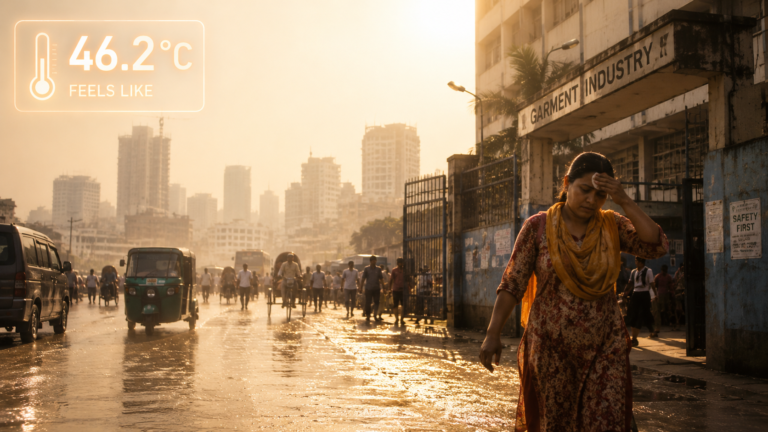 Climate Change
 ESG in Banks & NBFIs
Hivedemy turns ESG into short, hands-on lessons built and checked by professionals worldwide. Every lesson teaches first, then asks you to do the work, and every attempt gets a reason.