
 Climate Change
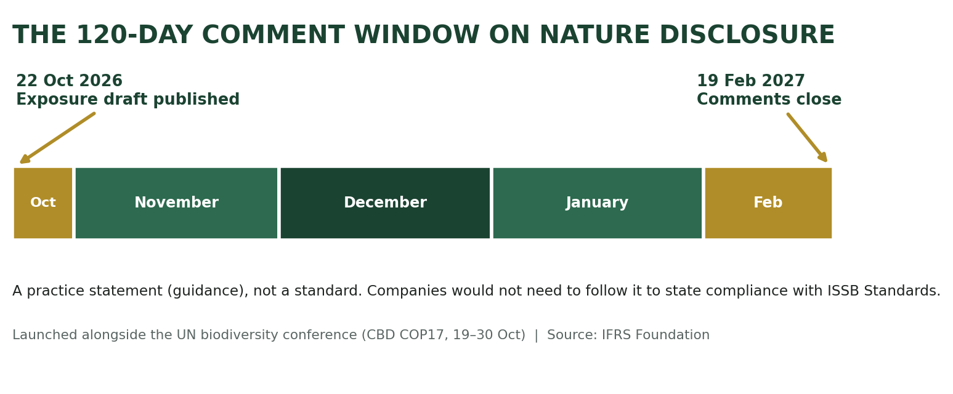
On 22 October the ISSB published a draft practice statement on nature-related disclosures, open for comment until 19 February 2027. It is guidance, not a new standard, but it signals where reporting is heading. For a delta country that leans on rivers, wetlands and mangroves, it is worth reading.

While governments gathered in Yerevan for the UN biodiversity conference, CBD COP17, the world’s sustainability standard-setter opened a consultation of its own. On 22 October the ISSB published an exposure draft, ISSB/ED/2026/1, proposing a Practice Statement on nature-related disclosures.
A practice statement is guidance, not a standard. Under the proposal, a company would not need to follow it to state that it complies with ISSB Standards. It draws on the recommendations of the Taskforce on Nature-related Financial Disclosures (TNFD). It also puts weight on location, meaning where a company’s operations and supply chains touch nature, and on engagement with Indigenous Peoples and local communities.
S&P Global reported that an earlier ISSB staff paper pointed toward nature-related scenario analysis and disclosure of the amount and percentage of assets or business activities vulnerable to nature-related risks. The final shape depends on the feedback the ISSB receives.
The comment window runs 120 days, closing on 19 February 2027.
Why should Bangladesh pay attention? IFRS S1, which the Financial Reporting Council has adopted, already covers all sustainability-related risks and opportunities that could affect a company’s prospects. That can include nature. A delta economy touches nature everywhere- in rivers and wetlands, mangroves and fisheries, farmland and coastal belts. Any company that depends on them has a nature-related story to tell, whether it has measured it or not.
Comment letters are how stakeholders help shape the final text, and voices from emerging economies are far less common than those from large markets. A well-argued submission from Bangladesh would stand out.
Nature-related risk assessment starts with a clear understanding of operational and supply-chain dependencies and impacts. Organisations must map these connections, establish what the data confirms, and distinguish verified findings from assumptions before making any formal commitments.
The clock is running.
Climate Change Climate Change
 ESG in Banks & NBFIs
Hivedemy turns ESG into short, hands-on lessons built and checked by professionals worldwide. Every lesson teaches first, then asks you to do the work, and every attempt gets a reason.