Bangladesh has long treated climate risk through the lens of floods, cyclones, and rising sea levels.
But another threat is escalating rapidly—and unlike cyclones, it arrives without warning sirens.
Heat.
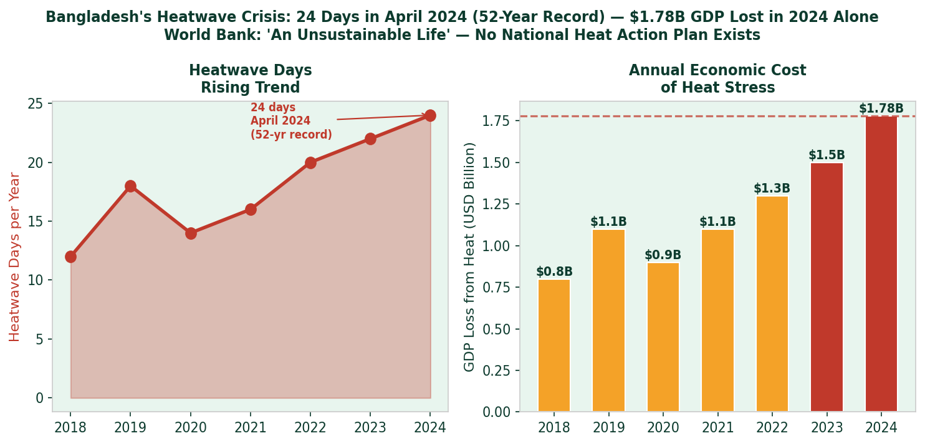
According to recent estimates, Bangladesh lost approximately $1.78 billion in GDP in 2024 due to heat stress, equivalent to around 0.4% of national output. The number is significant not only because of its size, but because of what it signals: heat is no longer just a seasonal weather issue. It is becoming a structural economic risk.
That shift deserves urgent attention.
Extreme heat is already affecting labour productivity, worker health, healthcare costs, energy demand, and overall business performance. For a labour-intensive economy like Bangladesh, the implications are substantial.
The trend is becoming difficult to ignore.
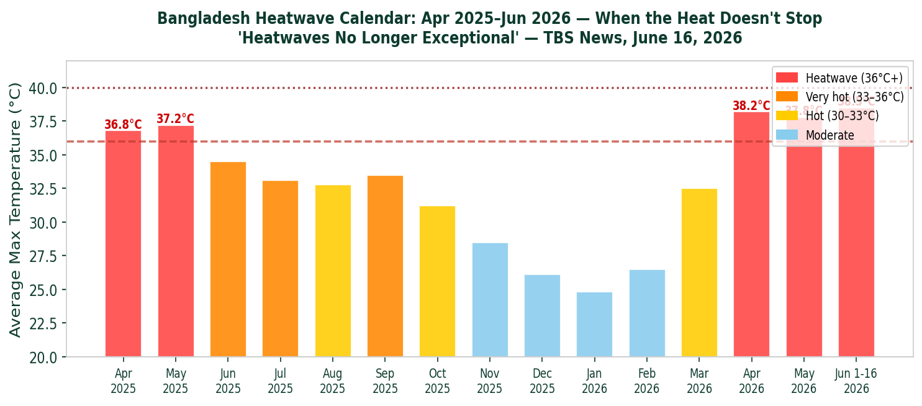
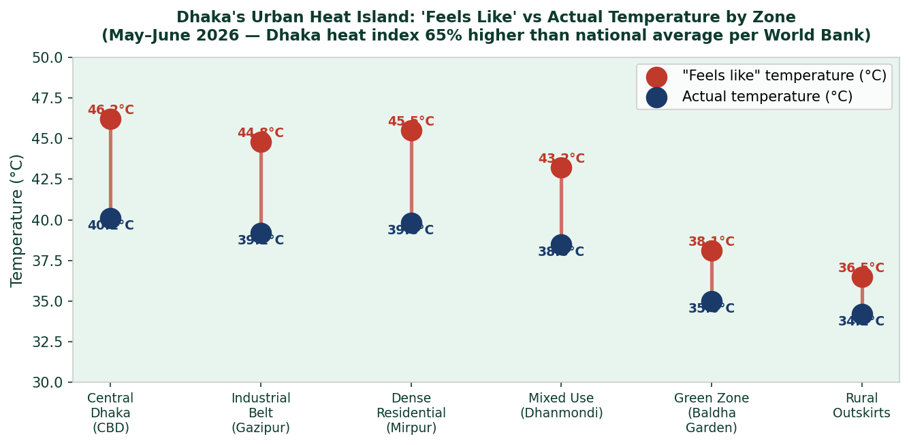
Bangladesh recorded 24 heatwave days in April 2024, the highest in 52 years. In parts of Dhaka, the heat index—or “feels-like” temperature—rose above 46°C, amplified by dense urban infrastructure, limited green cover, and the urban heat island effect.
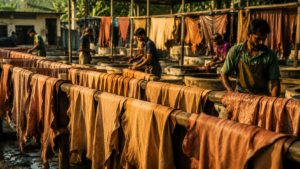
For millions of workers in construction, transport, agriculture, logistics, and manufacturing, these are not just uncomfortable conditions.
They are increasingly dangerous working conditions.
And for businesses, the consequences are becoming measurable.
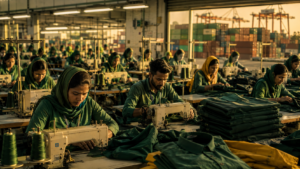
Heat stress reduces physical productivity, increases fatigue-related errors, raises absenteeism, and disrupts operations. In sectors such as garments and manufacturing, even modest productivity declines can translate into major economic losses over time.
This is why heat should no longer be framed solely as an environmental concern.
It is becoming an economic and governance issue.
One of the most concerning gaps is institutional readiness. Despite rising temperatures and repeated heatwaves, Bangladesh still lacks a dedicated national heat disaster management framework. Unlike floods or cyclones, heat has not yet been fully integrated into disaster preparedness, workplace safety standards, or infrastructure planning.
That gap creates vulnerability.
As global supply chains become more climate-conscious, physical climate risk is gaining greater attention from investors, lenders, and international buyers. Increasingly, resilience is becoming part of competitiveness.
The business implications are especially important for export-driven sectors.
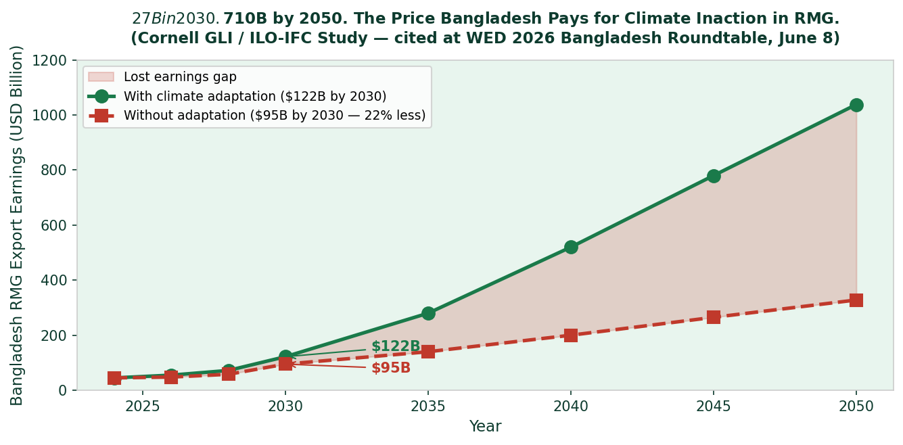
Climate adaptation could influence an estimated $27 billion difference in export potential by 2030—approximately $122 billion with effective adaptation versus $95 billion without it.
That is not a marginal difference.
It suggests that climate adaptation is no longer only about sustainability goals or environmental responsibility. It is increasingly tied to economic resilience, operational continuity, and long-term competitiveness.
The broader message is clear.
Bangladesh has spent decades strengthening resilience against floods and cyclones. The next major climate challenge may require a different kind of preparation—one focused on urban planning, cooling infrastructure, workplace heat protocols, and long-term adaptation investment.
Heat is no longer just part of summer.
It is becoming part of economic strategy.