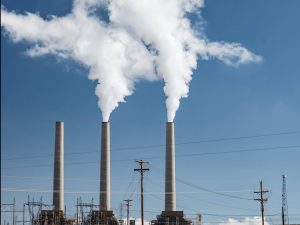
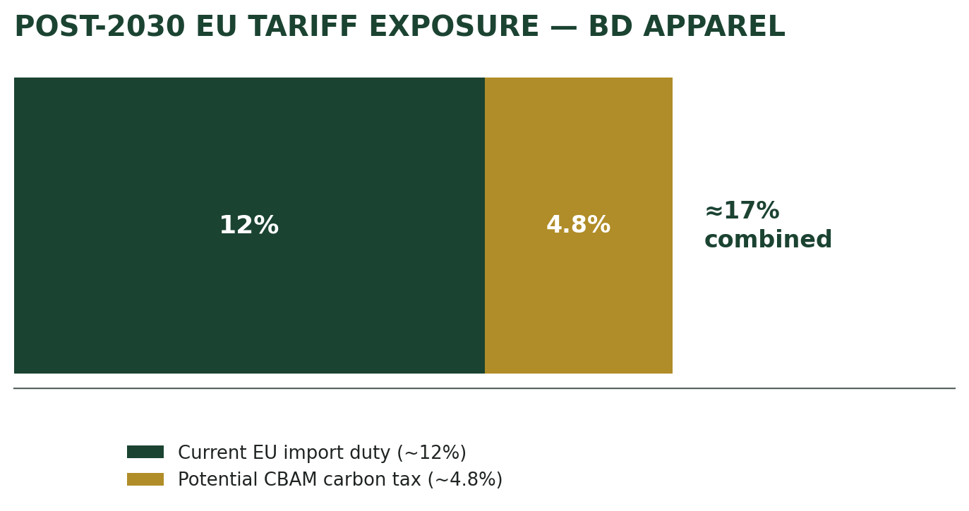
CPD research estimate of combined tariff exposure once CBAM’s carbon tax layers onto the standard EU import duty. Apparel makes up over 80% of Bangladesh’s exports, and the EU absorbs over half of that apparel trade — with LDC graduation (24 Nov 2026) removing duty-free access on a 3-year taper.
Two separate policy shifts in Europe are about to collide over Bangladesh’s most important export industry, and almost no one is talking about them together.
The first is well known: Bangladesh graduates from Least Developed Country status on 24 November 2026, after which its duty-free, quota-free access to the EU market — the backbone of its garment trade — begins phasing out, with a three-year grace period extending full benefits to 2029. The second is quieter but potentially just as costly: the EU’s Carbon Border Adjustment Mechanism, a carbon tariff currently applied to cement, steel, fertiliser and a handful of other carbon-intensive goods, with apparel widely expected to be folded into its scope by 2030.
Research from the Centre for Policy Dialogue puts a number on what that could mean. If Bangladesh’s apparel sector doesn’t meaningfully reduce its emissions intensity before CBAM expansion, garment exports to the EU could face an additional carbon tax of roughly 4.8%, calculated against current emissions levels in production. Stack that on top of the average 12% EU import duty that kicks in once LDC-era preferences lapse, and total tariff exposure on Bangladesh’s apparel exports to Europe could approach 17%.
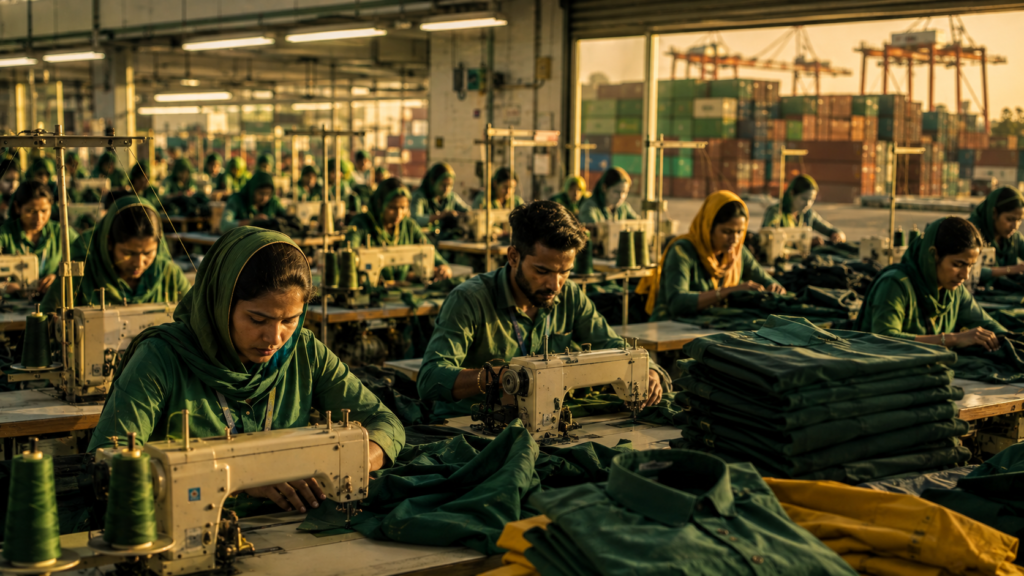
The scale of what’s at stake makes that number impossible to shrug off. Apparel accounts for more than four-fifths of Bangladesh’s total export earnings, and the EU alone absorbs more than half of that apparel trade. A near-17% tariff wall on the industry that carries the national economy isn’t a rounding error — it’s a structural competitiveness threat that could reshape sourcing decisions among European buyers already juggling their own compliance costs.
Here’s the part that should change how factories think about this: CBAM isn’t punitive by design — it’s designed to reward lower emissions. Where a carbon price has already been paid on emissions embedded in a product, importers can claim a reduction in the CBAM certificates they need to surrender. In principle, that means a Bangladeshi factory that has genuinely decarbonised its production — cleaner energy, better process efficiency, verified emissions data — pays a smaller carbon tax than a competitor that hasn’t. The mechanism isn’t just a cost; it’s also a competitive lever, but only for exporters who can measure, verify and report their emissions credibly enough for EU customs authorities to trust the numbers.
That’s the quiet catch. CBAM compliance runs on verified emissions data — the kind that requires internationally recognised measurement, reporting and verification capability, not back-of-envelope estimates. With apparel’s inclusion in CBAM’s scope still years away but the compliance machinery already running for other sectors — over 4,100 EU operators registered as authorised declarants in the first week of January 2026 alone — the runway to build that capability is shorter than it looks. The factories and finance teams that start building genuine emissions measurement and reporting discipline now will be the ones positioned to turn Europe’s carbon border into a competitive advantage, rather than a new tax nobody budgeted for.