Insights from experts on “Navigating ESG Reporting Complexity”

Industry experts urge SMEs to adopt ESG reporting to stay competitive and improve profitability.

Share On:

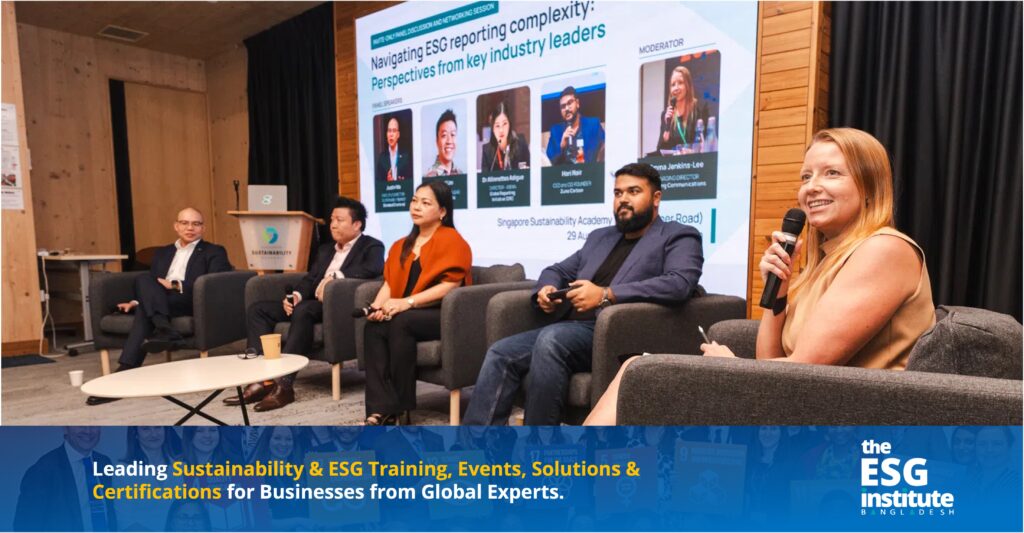
Limited budget, manpower challenges, and a lack of understanding deter small and medium-sized enterprises (SMEs) from adopting environmental, social, and governance (ESG) reporting. This issue was highlighted at the Navigating ESG Reporting Complexity event on August 29, organized by ESG management platform Zuno Carbon and Spurwing Communications, which attracted around 50 participants, mostly from SMEs.

Ong Gin Keat, director of sustainability and business development at Envcares, noted that while ESG reporting is widely discussed, many companies lack a full understanding of its implications. He emphasized the need for company-wide comprehension of the practice’s intentions.

Allinnettes Adigue, head of the Asean Regional Hub of the Global Reporting Initiative (GRI), pointed out that sustainability reporting requirements, including mandatory climate reporting, are primarily targeted at listed corporations. However, large corporations will soon need to disclose their Scope 3 emissions, which can constitute up to 70% of a company’s carbon footprint, originating mainly from supply chains. This makes ESG compliance critical for SMEs to remain competitive and sustain business relationships.

Despite significant challenges such as limited resources, expertise, and data collection complexity, Adigue stressed the importance of supporting SMEs through financing, capacity building, and increased awareness to facilitate their transition to a low-carbon economy.

Hari Nair, CEO of Zuno Carbon, highlighted the tangible benefits of sustainability reporting for SMEs. He explained that larger companies with supply chains in Southeast Asia, often consisting of SMEs, increasingly value ESG metrics and reports from their partners as ESG and sustainability issues gain prominence.

By addressing these challenges and leveraging support mechanisms, SMEs can effectively engage in ESG reporting, enhancing their competitiveness and contributing to a sustainable future.

Meet the Author

Share On:

Being read right now

Bangladesh’s Garment Sector Got Hit Three Ways in April. Solar Was the Only Shield

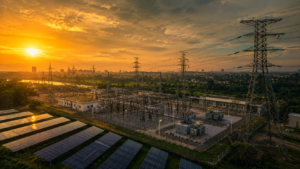
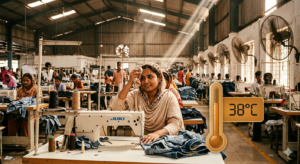
8–10% buyer order cuts. Diesel rationed through BGMEA cards since April 13. Dhaka–Chattagram freight up 32% — from Tk 38,000 to Tk 50,000 — since the Middle East war escalated. Three separate shocks, one sector, one month. The factories with rooftop solar kept producing. The ones on diesel generators did not. This is what the ESG business case looks like when it stops being theoretical.

Bangladesh Throws Away $8 Billion Every Year. It Calls the Pile ‘Textile Waste

Bangladesh generates 600,000 tonnes of textile waste every year. It currently recycles about 30% of cotton-based scraps. Most of the rest is exported to India and Pakistan for processing — then reimported as recycled yarn at a premium. BGMEA's own Vice-President puts the missed circular economy opportunity at $8 billion annually. This is not waste. It is money Bangladesh is gifting to its competitors.

Insights from the 2024 FITC Sustainability & ESG Summit

The Financial Institutions Training Centre (FITC), has launched the FITC Sustainability & ESG Institute, an effort it said is a significant step in promoting environmental, social, and governance (ESG) principles across Africa.

Bangladesh Signed a Trade Deal with Japan. Labour Rights and Environmental Accountability Are in the Text

On February 6, Bangladesh signed its first-ever Economic Partnership Agreement with Japan. The headline: duty-free access to 97% of Bangladesh's export basket, including RMG. What the headlines missed: the EPA contains specific provisions on labour rights, fair wages, safe work environments, social security, pollution control, natural resource conservation, and sustainable development. This is not just a trade deal. It is ESG compliance embedded in bilateral law.

At ESG Institute Bangladesh, learn from global and local experts in sustainable development and join a community of professionals committed to making lasting change.

ESG Corporate Workshops

Expert learning on fundamentals of ESG and Sustainability for Corporates.
Learn more

ESG Student

Workshops

University sessions by corporate, policy and development sustainability experts on SDGs, Careers and Sustainability.
Learn more

ESG & Sustainability

Corporate Training

Curated, certified training on key SDG, ESG, Sustainability and Compliance experts from around the globe designed to build professional expertise.
Learn more

ESG-Sustainability

Professional Certifications

Build your professional career in ESG & Sustainability from globally recognized certifications and accreditions.
Learn more

ESG Professional Bootcamp

Learn from ESG-Sustainability experts and network with professionals in the industry in an engaging, 2-day Bootcamp centered on intensive learning on ESG and Sustainability for corporates.
Learn more

Contact Us

Contact the ESG Institute Bangladesh below, or send your contact information to request a callback from our representative.

Address

6th Floor, BIMS Bhaban, GA-9/3, Progoti Sharani, Dhaka-1212

Email

info@esginstitutebd.com

Call Us

+8801626658248