It’s rare for a stock exchange chief, a central bank director, and the head of a professional accounting body to show up at the same seminar and say, in effect, the same thing. That’s exactly what happened at a recent seminar in Dhaka, and the message deserves more attention than a single day’s news cycle gave it.
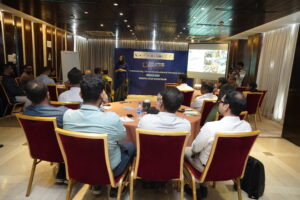
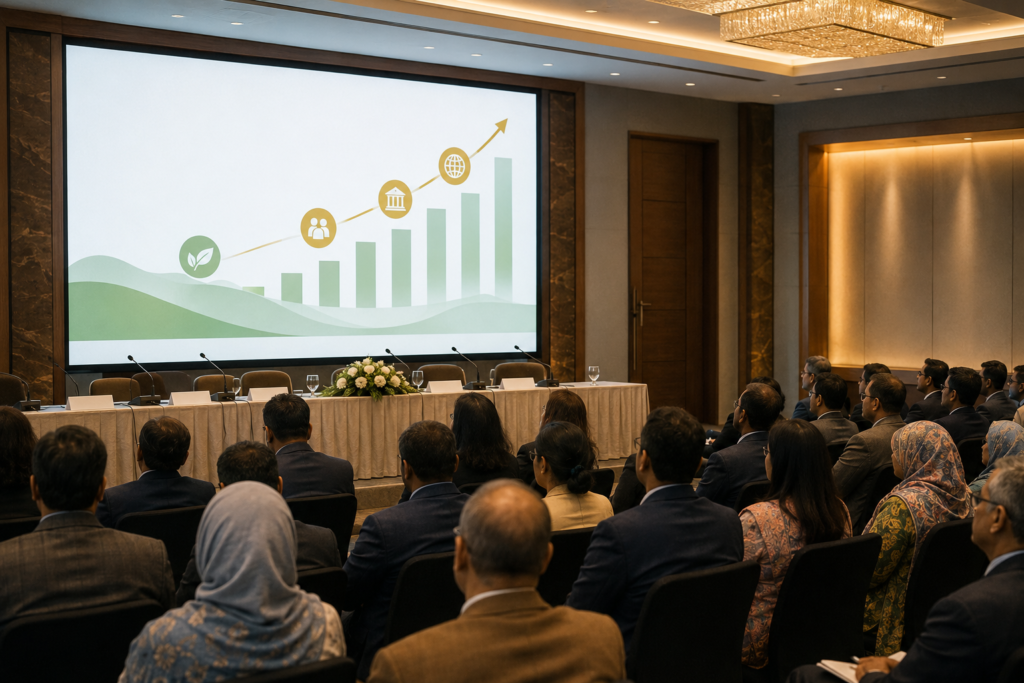
The Institute of Chartered Secretaries of Bangladesh (ICSB) organised the session, titled “Sustainability Reporting: Regulations & Way Forward,” at the BIM Auditorium, bringing together regulators, corporate leaders, and professionals to discuss where sustainability reporting in Bangladesh is heading — and how unprepared much of the corporate sector currently is to get there.
ICSB President Hossain Sadat opened by anchoring the discussion in Responsible Business Conduct, pointing to OECD and ILO principles as the emerging expectations for how companies operate. His framing was blunt: mandatory reporting and formal assurance certification are no longer a distant possibility — they’re the direction regulation is actively heading. Professor Dr Feroz Iqbal Faruque, who chairs ICSB’s Sustainability and ESG Sub-Committee, followed by grounding the conversation in fundamentals that often get lost in compliance discussions: trust, professionalism, and ethics as the actual foundation sustainability reporting is supposed to protect.
Then came the sharpest line of the day. Nuzhat Anwar, Managing Director of the Dhaka Stock Exchange, told the room that sustainability and ESG compliance are becoming critical not as a regulatory checkbox, but for Bangladesh’s competitiveness and its ability to attract foreign investment. She specifically flagged the need for capacity building and stronger collaboration among stakeholders — a polite way of naming a gap that companies, regulators, and professional bodies all seem to agree exists but few have systematically addressed.
Chowdhury Liakat Ali, Director of Bangladesh Bank’s Sustainable Finance Department, added a technical layer that many companies haven’t yet reckoned with: the implementation of IFRS S1 and S2, the international standards governing general sustainability and climate-related financial disclosures. These aren’t abstract international frameworks anymore — they’re actively being built into Bangladesh’s regulatory expectations, alongside other sustainable finance initiatives already underway at the central bank. The seminar’s chief guest, representing the Financial Reporting Council, added further institutional weight to the day’s core message.
Strip away the seminar format, and what’s left is a fairly stark signal: when the stock exchange, the central bank, and the accounting profession’s own institute all independently point to the same gap — insufficient capacity for sustainability reporting — that gap isn’t a future risk. It’s a present one. Companies that treat this as a compliance formality to handle closer to enforcement deadlines are, according to the people setting those deadlines, already behind. The institutions writing Bangladesh’s ESG rulebook have been unusually clear about what comes next. Whether the corporate sector is listening is a separate question entirely.