
 Energy
On 1 November, protests closed 529 garment factories and left 987,190 workers off the job as workers demanded Tk30,000 a month against today's Tk12,500. A wage board has agreed the new structure applies from 1 December, but the amount is still open. A global scorecard shows why the pressure reaches beyond Bangladesh- only four of 110 brands say anyone in their supply chain earns a living wage.
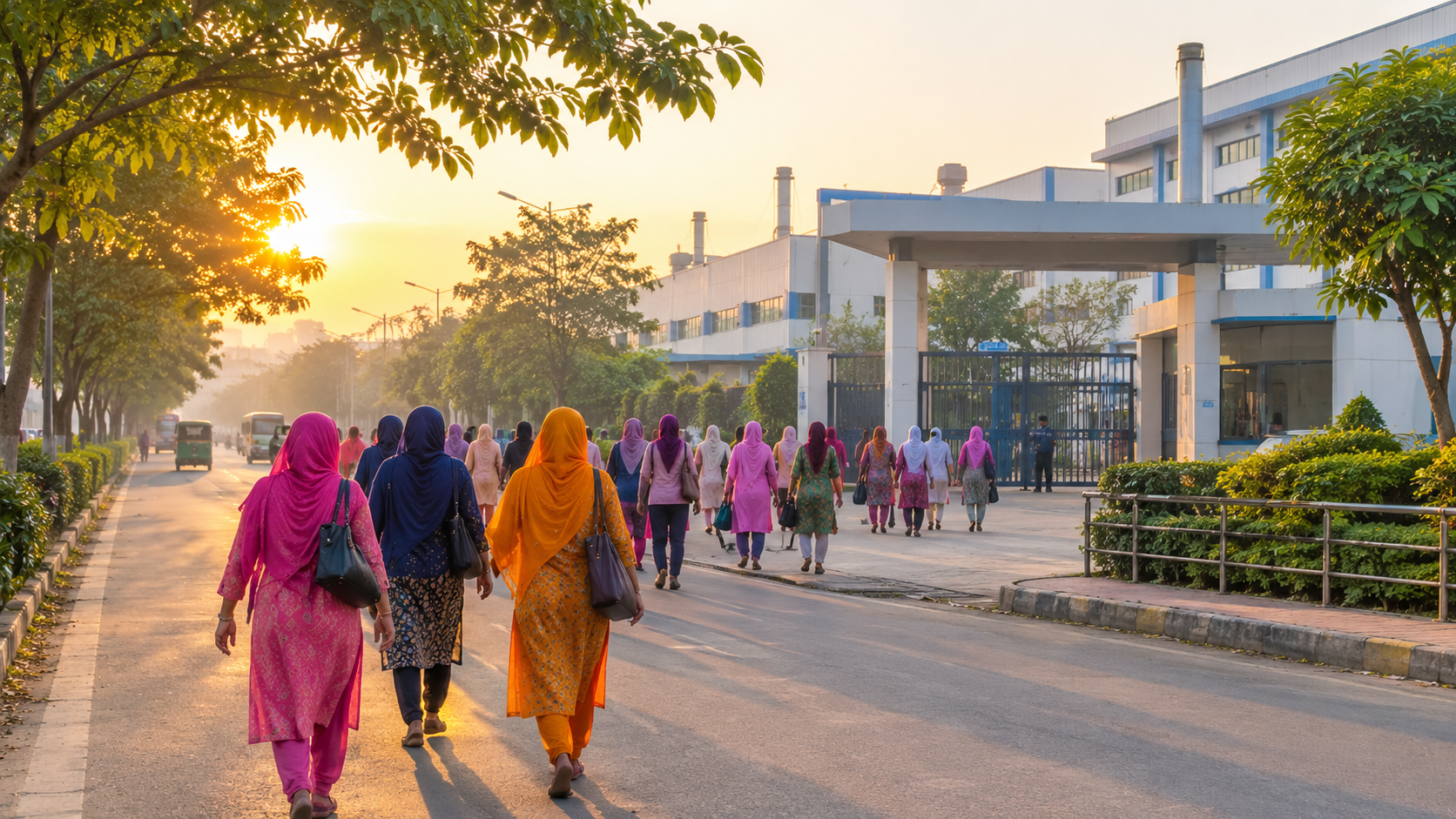
Bangladesh’s garment industry, roughly 10 percent of GDP, was reminded on 1 November how quickly a number can shut a factory. Protests halted 529 factories and affected 987,190 workers that day, according to manufacturers’ association figures reported in the press.
Workers demand Tk30,000 a month, about $245, a 140 percent rise on the current Tk12,500. That minimum was set in 2023, after Tk8,000 in 2018, Tk5,300 in 2013 and Tk3,000 in 2010. The government formed a six-member wage board on 1 November, announced by Labour Minister Ariful Haque Choudhury. Forming it does not mean the demand has been accepted. Reuters reported clashes with police as protests continued.
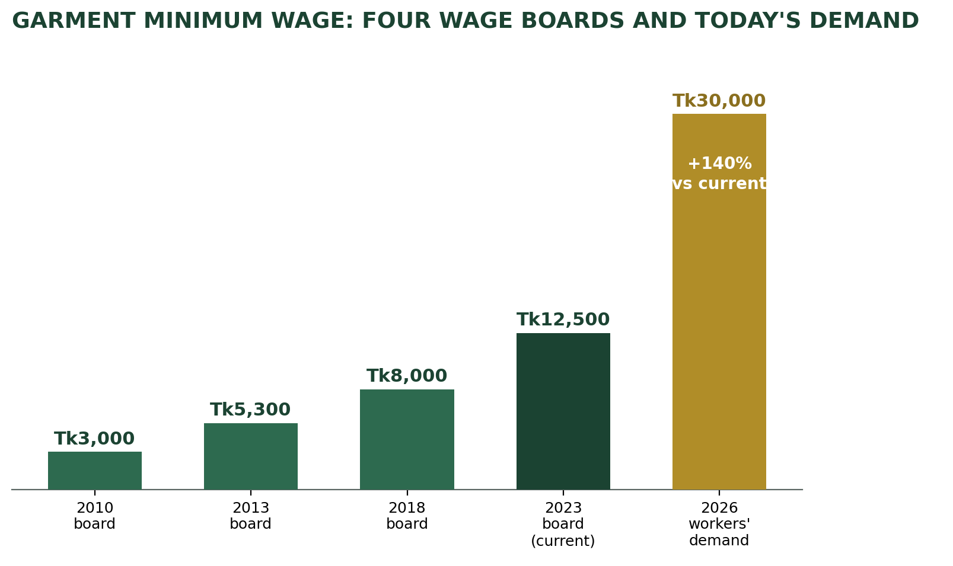
Entry-level garment minimum wage set by successive wage boards, against the workers’ 2026 demand. The demand is not a decision.
On 4 November, at the first meeting under new chairman Syed Azad Subhani, employer and worker representatives agreed that the new wage structure takes effect on 1 December, with workers expected to see the higher pay in their January salaries. The amount is undecided. Written proposals are due at the second meeting on 9 November, and employers’ representative ABM Shamsuddin said owners aim to finish by December.
Now widen the lens. The Clean Clothes Campaign’s Fashion Checker, tracks 110 major brands. Only four say a living wage is paid at any level of their supply chain, and just 3 percent disclose wage levels at supplier facilities. The campaign says Bangladesh garment workers earn 73 percent less than a living wage, and that major brands pay 30 percent less in real terms for a cotton T-shirt than they did 25 years ago.
H&M shows how contested this is. Its public data lists a gross average wage of Tk18,000 a month in Bangladesh. The campaign cites a living wage benchmark of Tk30,000, the same figure as the workers’ demand, and notes that the gross average may include overtime. H&M says the report does not give an accurate picture and that its suppliers pay averages above the minimum wage in many countries.
The law is turning this into an obligation. From 2029, the EU’s due diligence directive will hold large fashion companies accountable for pay structures in their supply chains, and 30 of the surveyed brands are expected to be in scope.
A wage dispute that closes more than 500 factories in a day is a supply-chain risk event. Managing it takes capability built in advance: benchmarking wages, modelling costs, documenting wage structures and overtime dependence, and keeping credible channels open with worker representatives.
Wage disputes return on a regular cycle, and the companies that prepare for each cycle in advance are the ones that keep their lines running.
Energy ESG Reporting
 Governance
Hivedemy turns ESG into short, hands-on lessons built and checked by professionals worldwide. Every lesson teaches first, then asks you to do the work, and every attempt gets a reason.