Bangladesh’s FY2026-27 budget proposes Tk 51,746 crore for climate-related activities — a 25.57% increase from the Tk 41,209 crore allocated in FY26. The growth is genuine and the Finance Minister’s decision to increase climate allocation in a constrained fiscal environment deserves credit. What the headline number obscures is the composition of that spending — and what that composition reveals about Bangladesh’s current approach to the climate challenge.
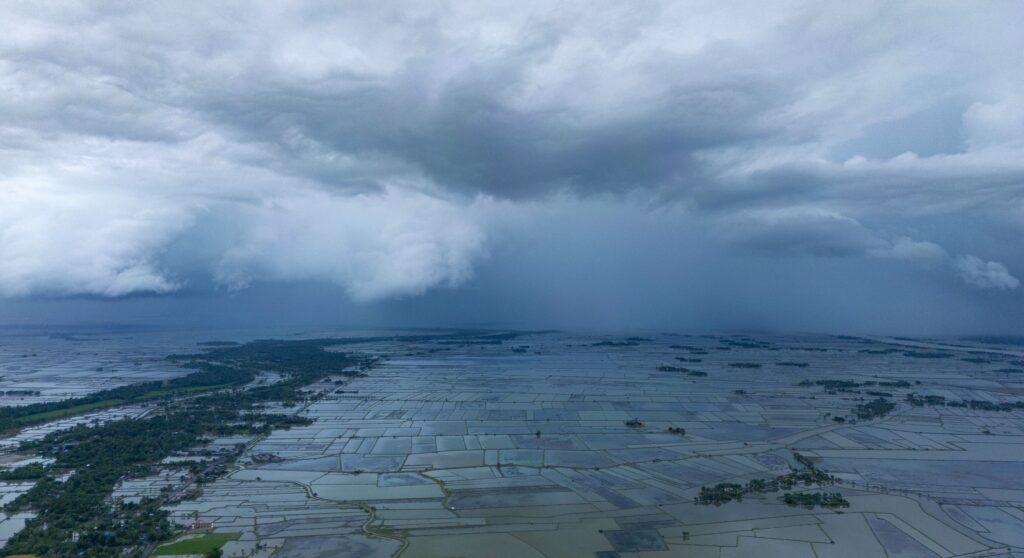
Of the total, Tk 38,906 crore — 75.2% — is allocated to adaptation activities: flood control infrastructure, embankment maintenance, coastal protection works, drainage management, climate-resilient agricultural programmes, and social safety nets for climate-affected populations. These are not discretionary investments. Bangladesh’s 7th-place ranking in global climate vulnerability means that without these interventions, lives and livelihoods are immediately at risk. But they are also fundamentally defensive — they slow the pace of climate-driven loss rather than reducing its underlying causes.
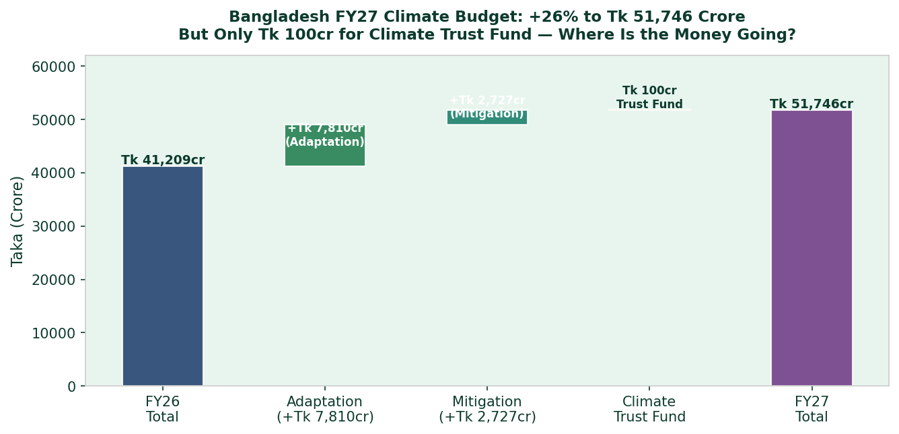
FY27 climate budget waterfall — from Tk 41,209cr (FY26) to Tk 51,746cr, with adaptation absorbing 75% and the Climate Trust Fund receiving just Tk 100cr. A budget composition that raises as many questions as it answers.
A climate budget that grows by 26% but directs 75% to flood walls is not a transformation budget. It is a maintenance budget for an increasingly expensive status quo.
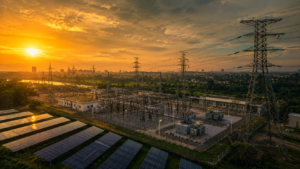
The remaining Tk 9,640 crore covers mitigation — renewable energy expansion, energy efficiency programmes, and clean transport initiatives. The Climate Change Trust Fund, the dedicated financing vehicle for innovative climate projects, received Tk 100 crore — 0.2% of the total climate budget. That figure reflects a structural underinvestment in the transformative, capacity-building climate action that international climate finance institutions specifically seek to support.
The dependency problem compounds this. According to TBS News analysis, 88% of Bangladesh’s climate budget is financed by foreign loans and grants — only 12% comes from domestic revenues. A climate strategy built on borrowed money carries a hidden cost that adaptation spending, by definition, cannot recover: interest payments that consume fiscal space needed for future investment. Building domestic climate finance capacity — through green bonds, climate-linked tax instruments, carbon market revenues — is the structural shift that would change this equation.
The FY27 budget’s commitments on carbon markets — 11 new Article 6 projects, half the coastal mangrove belt under trading, Tk 3.75 billion in projected revenue — point toward the proactive, revenue-generating climate investment that would balance the adaptation-heavy composition. But those commitments depend on institutional infrastructure that does not yet exist at adequate scale. Bangladesh’s climate budget is growing. Its architecture needs to grow with it.