Bangladesh has secured something many developing economies rarely receive during major economic transition: additional time.
The United Nations Committee for Development Policy (CDP) has recommended approving Bangladesh’s request to extend its LDC graduation preparatory period by three years, moving the timeline from 24 November 2026 to 24 November 2029. The decision offers temporary relief at a critical moment, as Bangladesh continues navigating inflationary pressure, geopolitical uncertainty, supply-chain disruption, and slowing global demand.
At first glance, the extension appears to be a positive development.
It is—but only if interpreted correctly.
The deeper story is not about delay. It is about preparedness.
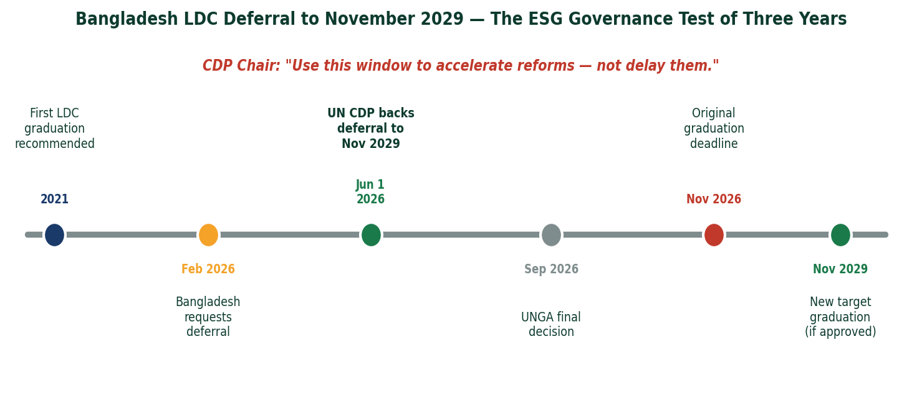
Bangladesh has already met all three graduation criteria: gross national income per capita, human assets, and economic vulnerability. Graduation itself is no longer the question. The real question is whether Bangladesh is structurally ready for what comes after graduation.
That distinction matters.
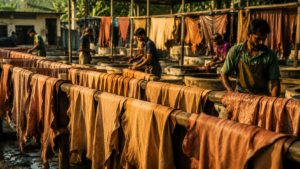
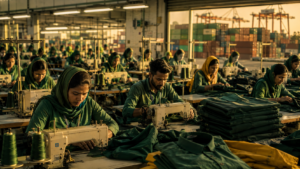
Once Bangladesh exits LDC status, it will gradually lose preferential trade benefits, policy flexibilities, and concessional support that have supported export growth for decades—particularly in the ready-made garments sector.
This is why the three-year extension should not be viewed as a pause.
It should be viewed as a strategic execution window.
The challenge is that global trade dynamics have changed significantly. Ten years ago, competitiveness was largely about cost efficiency and scale. Today, market access increasingly depends on governance, transparency, traceability, and compliance.
This means Bangladesh’s post-LDC competitiveness will not be determined by tariffs alone.
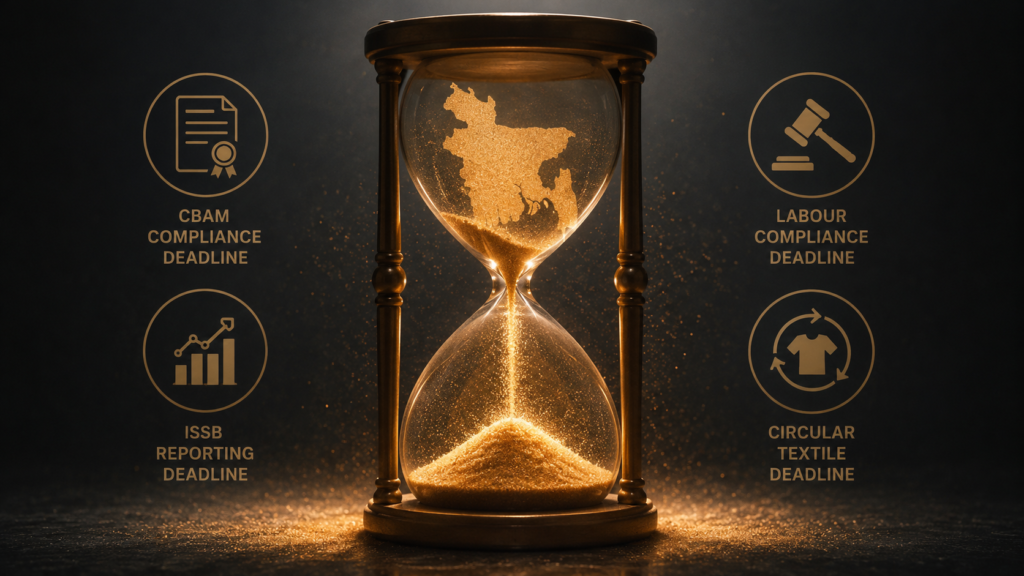
Increasingly, it will depend on whether businesses can demonstrate strong labour governance, credible ESG disclosures, climate resilience, supply-chain traceability, and carbon data readiness.
In other words, while the LDC deadline moved, many of the global compliance deadlines did not.
That is the real urgency.
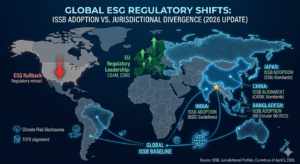
International buyers are tightening supplier expectations. Financial institutions are increasing scrutiny on governance and sustainability performance. Carbon-related regulations are expanding. Disclosure frameworks such as ISSB are pushing climate risk reporting closer to mainstream financial reporting.
For Bangladesh, this creates both pressure and opportunity.
The pressure is obvious: delayed reforms could create a painful compliance shock by 2029.
The opportunity is equally significant: if the next 36 months are used effectively, Bangladesh could graduate with stronger institutional readiness, improved investor confidence, and better positioning in global value chains.
The danger lies in complacency.
Extensions can create psychological comfort. Comfort often slows reform.
That would be a costly mistake.
The next three years may ultimately matter more than the previous ten. Bangladesh has not been given extra time to wait. It has been given extra time to prepare.
How that window is used may determine whether LDC graduation becomes a smooth transition—or a difficult economic adjustment.