
 Governance
A roundtable on BSEC's draft Corporate Governance Rules 2026 raised a gap the draft does not yet fill: who verifies the new environmental and social disclosures. The draft also tightens the rules for independent directors. Experts want a phased rollout, and BSEC says it aims to finalise the framework this year.

Bangladesh’s listed companies are about to get a new governance rulebook, and the debate has moved from whether to how. At a roundtable titled ‘Strengthening Corporate Governance in Bangladesh’, organised by SMAC Advisory Services in Dhaka, regulators, company representatives, professional bodies and academics reviewed the draft Bangladesh Securities and Exchange Commission (Corporate Governance) Rules 2026 and called for a phased and practical rollout.
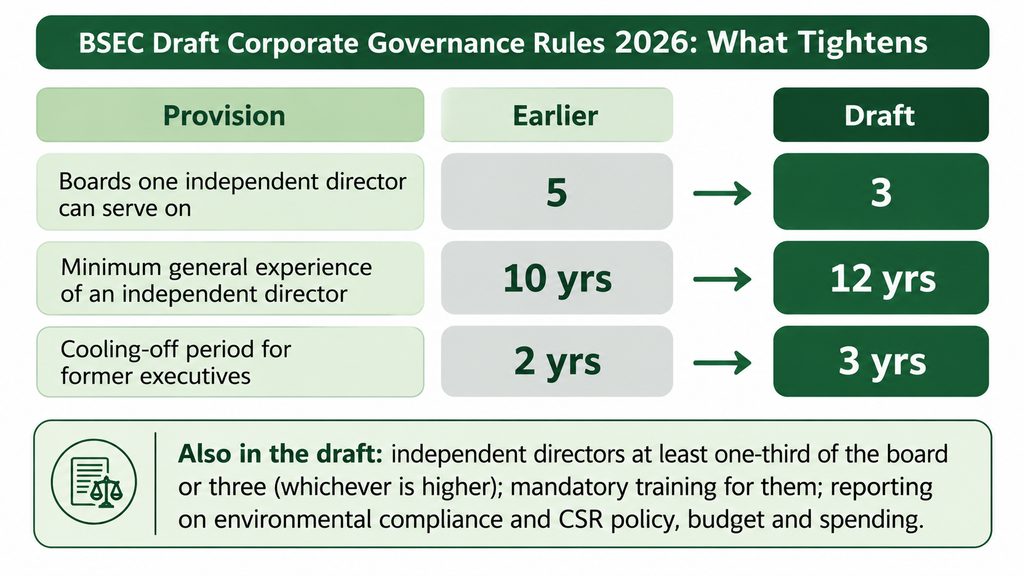
The draft goes beyond boardroom structure. It introduces reporting requirements covering environmental compliance, corporate social responsibility policies, and CSR budgets and spending. That raised the matter of preparedness. Zareen Mahmud Hosein, chairman of SMAC Advisory, asked whether companies, consultants and auditors are ready, and who would verify or certify ESG disclosures. She urged adopting a common international framework for sustainability reporting to avoid overlapping requirements, and a roadmap for disclosures aligned with international standards.
Independent directors were the biggest implementation concern. Under the draft, the maximum number of listed-company boards on which an independent director can sit falls from five to three. The minimum general experience rises from 10 years to 12. Independent directors would have to make up at least one-third of a board, or three directors, whichever is higher. The cooling-off period for former executives extends from two years to three, and independent directors would have to complete mandatory training.
More independent seats do not automatically deliver independence, Zareen cautioned. She called for transparent nomination processes, disclosure of who proposes candidates, and clear evidence that nominees meet the independence criteria.
Others added depth. Prof Melita Mehjabeen of the Institute of Business Administration said boards should balance oversight with each organisation’s structure and circumstances. M Nurul Alam, president of the Institute of Internal Auditors Bangladesh, stressed directors’ professional knowledge and understanding of operations.
BSEC Commissioner Hossain Sadat said the commission would consider the feedback and aims to formulate an investment-friendly framework within this year. The commission first issued governance guidelines in 2006 and revised them as the Corporate Governance Code on 3 June 2018.
Strip away the detail and one gap remains. Rules can raise the bar for directors and add new disclosures, but they depend on people who can independently challenge a board, build a credible environmental report and assure it. Building those people is the unfinished part of this reform, and it has to start before the rules arrive.
Governance Governance
 Governance
Hivedemy turns ESG into short, hands-on lessons built and checked by professionals worldwide. Every lesson teaches first, then asks you to do the work, and every attempt gets a reason.