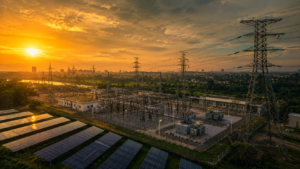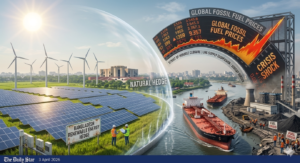
Bangladesh Power Development Board’s payment backlog for electricity purchase has exceeded approximately BDT 250 billion (USD 2.05 billion), and the new government will need to clear outstanding dues to avoid massive power supply disruptions — while also fulfilling its manifesto pledge to raise renewable energy capacity from its current 5% to 20% by 2030.
The energy-ESG link is direct and underreported. Bangladesh Bank’s IFRS S1/S2 disclosure guidelines now require banks to report on climate-related financial risks — which means energy sector exposure, fossil fuel dependency, and transition risk are landing on bank balance sheets whether institutions are ready or not.
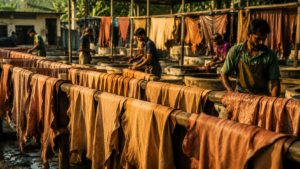
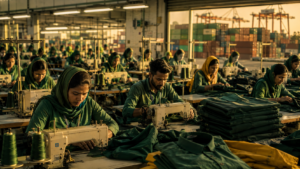
Corrective measures also cannot lead to drastic power tariff increases that would place the country’s export-oriented apparel industry at a competitive disadvantage in the global market — creating a fiscal trilemma: subsidy reform, renewable build-out, and export competitiveness don’t easily coexist.
The June 2026 budget is the first real test of whether this government can thread that needle.
Source: IEEFA
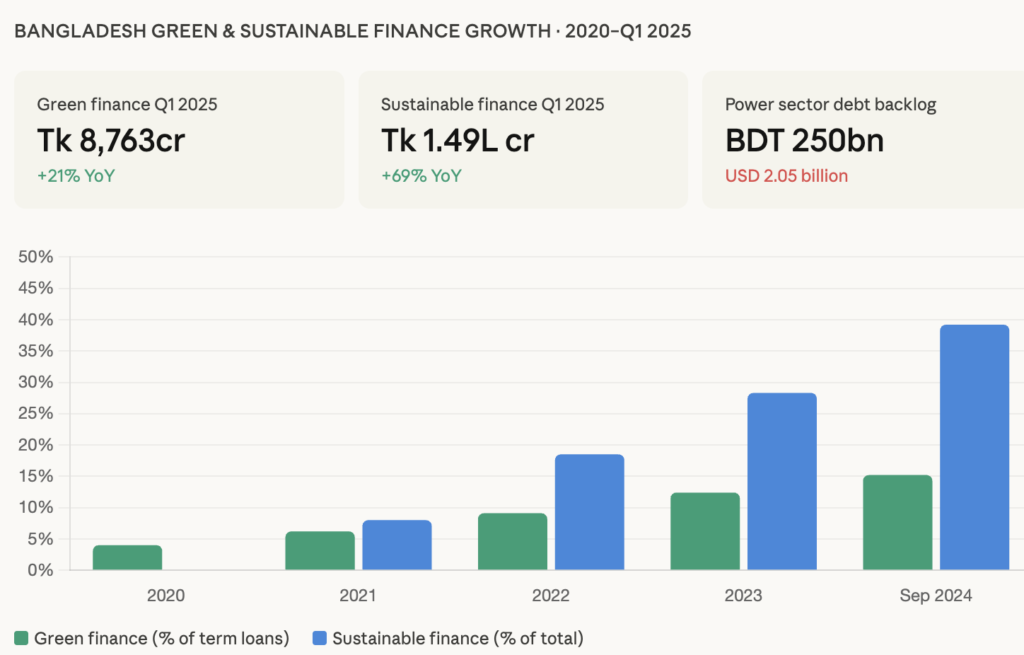
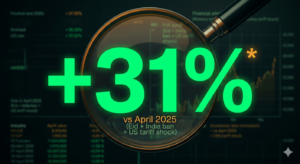
Source: FICCI Bangladesh / Bangladesh Bank · TBS, Jan 2026. Renewable energy capacity current: ~5% of electricity mix (IEEFA, March 2026). Annual climate finance need: USD 26bn (UNDP, 2026).