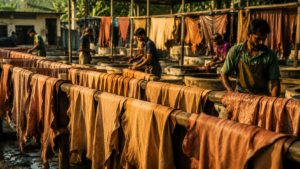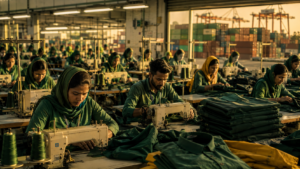
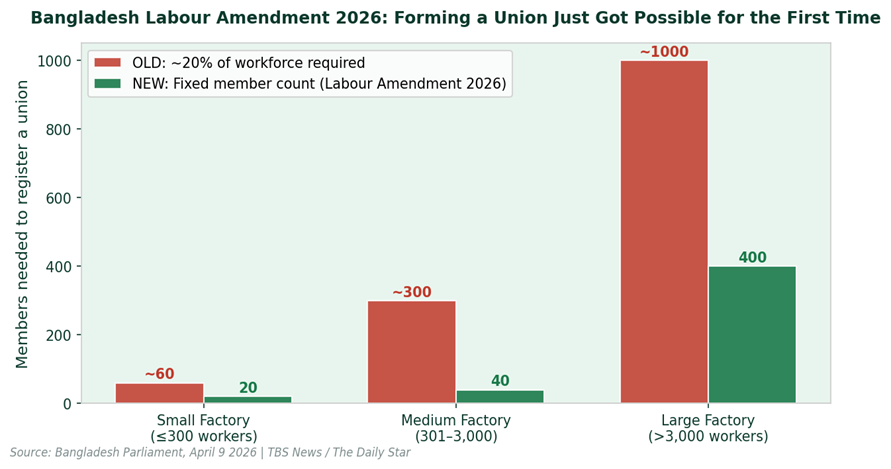
Union formation thresholds before and after Bangladesh Labour Amendment 2026, the shift from ~20% of workforce to fixed member counts makes collective bargaining genuinely accessible for the first time
Bangladesh’s Parliament passed the Labour (Amendment) Bill, 2026 by unanimous voice vote on April 9. The law is the most consequential update to Bangladesh’s labour architecture since the Rana Plaza aftermath triggered the Bangladesh Accord in 2013. But where the Accord focused on building safety, the 2026 amendment tackles something deeper: the structural barriers that have made genuine worker representation almost impossible in Bangladesh’s garment sector for decades.
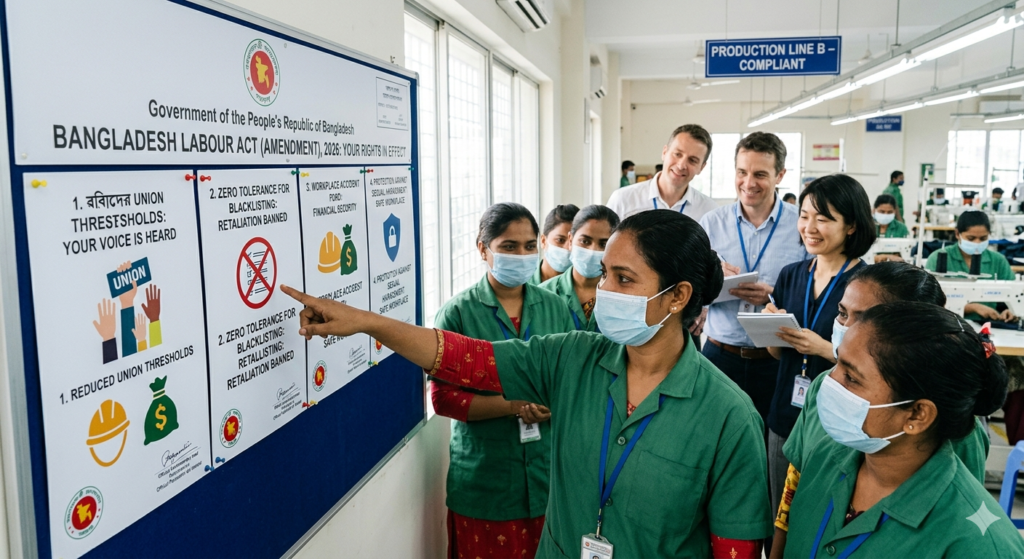
The headline change is the abolition of the 20% workforce threshold for union registration. Under the previous law, forming a union in a factory of 3,000 workers required the signed support of 600 employees in an environment where management retaliation, blacklisting, and dismissal made organising an act of personal financial courage. The new law replaces this with fixed numbers: 20 members for small factories (up to 300 workers), 40 for medium enterprises, and 400 for large factories. The barrier has not just been lowered. For most factories, it has been fundamentally redesigned.
“Bangladesh has taken a major step forward for workers.” Christy Hoffman, General Secretary, UNI Global Union, April 2026
The law goes well beyond union thresholds. Employers are now explicitly prohibited from blacklisting union members, a practice that had made labour activism a career-ending risk in the sector. Sexual harassment has been legally defined for the first time in Bangladesh labour law, with mandatory complaint committees required in workplaces, with a focus on female representation. A Workplace Accident Compensation Fund has been established. An Alternative Dispute Resolution Authority will begin clearing the notorious backlog of labour court cases. And employers are barred from creating ‘yellow unions’ management-controlled fake worker organisations.
UNI Global Union, the global federation that co-founded the Bangladesh Accord after Rana Plaza, welcomed the changes and confirmed a pilot programme for human rights due diligence in Bangladesh’s garment sector jointly with the new Competence Centre for Human Rights Due Diligence in Berlin is already underway.
Why does this matter for trade? Three simultaneous pressures were demanding this law. First: the US USTR Section 301 forced labour investigation, with public hearings beginning April 28. The USTR is examining whether Bangladesh has credible forced labour prohibitions and enforcement mechanisms. This law provides the first credible answer. Second: EU GSP+ qualification requires effective implementation of 32 international conventions including ILO core labour standards. The April 9 law is Bangladesh’s most direct response to years of EU pressure on union rights. Third: EU CSDDD supply chain due diligence, requiring brands to verify supplier labour practices by 2029. Buyers’ ESG teams now have documented legal standards to verify against.
The implementation challenge is real. Bangladesh Knitwear Manufacturers and Exporters Association raised legitimate concerns that the tripartite consultation process was bypassed. That must be addressed. The law is passed, the government now needs to invest in enforcement, inspector training, complaint mechanism resourcing, and transparent compliance reporting.