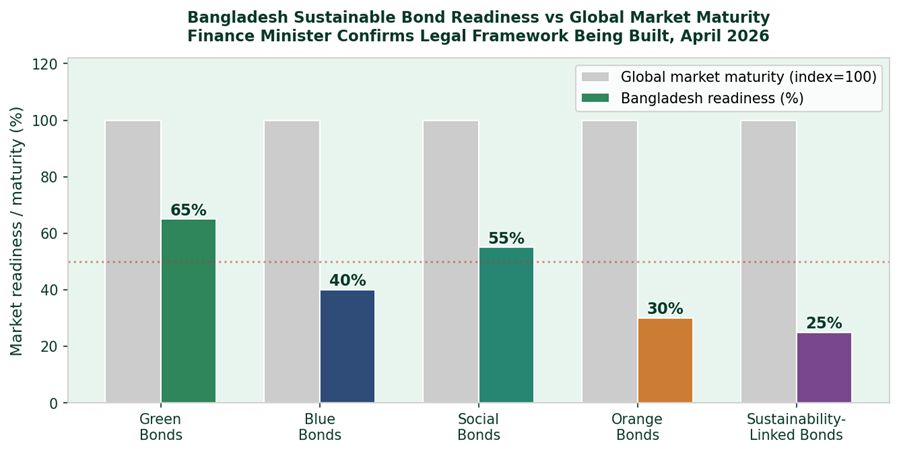
Bangladesh sustainable bond readiness vs global market maturity, green bonds most developed, blue and orange still nascent, all four now receiving legal recognition for the first time
Bangladesh’s Finance Minister has announced a capital market reform package that will, for the first time, embed the full taxonomy of sustainable financial instruments into the country’s debt securities regulatory framework. Planned amendments will legally define and regulate green bonds, blue bonds, orange bonds, and social bonds — each with a distinct regulatory foundation in Bangladesh’s securities law.
A single instrument, however notable, is not a market. The UNDP-City Bank commercial green bond was a landmark. But without legal definitions, issuance standards, verification requirements, investor disclosure rules, and regulatory oversight, it remained an exception rather than the beginning of a market. The Finance Minister’s reform package addresses this architecture comprehensively.
The four instruments map directly onto Bangladesh’s most critical financing gaps. Green bonds fund renewable energy, clean water, and climate adaptation. Blue bonds fund sustainable ocean and water economy projects — critical for Bangladesh’s 710km coastline and massive inland fisheries sector. Orange bonds address gender equality and women’s economic empowerment — aligning with Bangladesh’s global recognition as a leader in female workforce participation. Social bonds finance healthcare, education, and affordable housing under fiscal pressure.
Global green bond issuance: over $500 billion annually. Bangladesh’s share: near zero. The legal architecture now being built is what changes that equation.
The reform package also includes a Capital Market Stabilisation Fund Act 2026, new whistleblower protection rules, and a replacement for the 2018 Corporate Governance Code. Together, these create a more credible regulatory architecture that international ESG-indexed investors can engage with seriously.
The professionals who will make this market operational. Structuring a green bond requires expertise in use-of-proceeds frameworks, environmental impact assessment methodologies, knowledge of reporting standards, and independent verification capabilities. These are specialised skills. Bangladesh’s regulatory reform is creating the market.