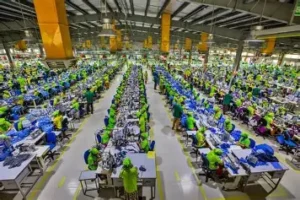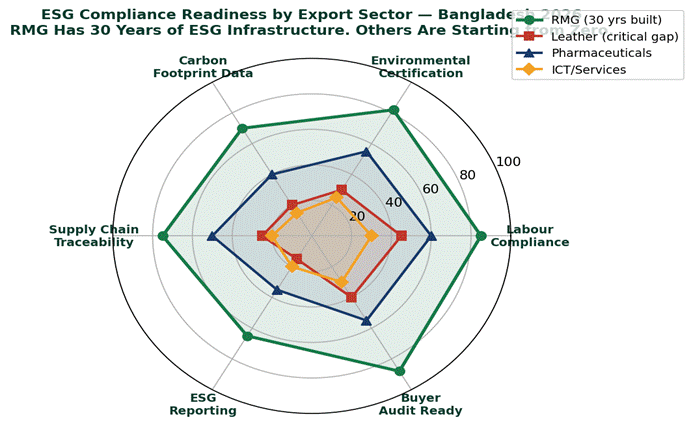
ESG compliance readiness radar across Bangladesh export sectors – RMG (green, outermost ring) has 30 years of built infrastructure. Leather (red), ICT (amber), and pharmaceuticals (blue) are near the centre across all six compliance dimensions
Bangladesh Bank’s Tk 3,000 crore Export Diversification Refinance Scheme, launched June 10, 2026, addresses one of the most structurally important vulnerabilities in Bangladesh’s economy: the dependence on a single export sector — ready-made garments — for more than 80% of total export earnings. The scheme provides refinance to commercial banks at 4%, allowing qualified non-RMG exporters to access credit at a maximum 7% rate. Eligible sectors include leather and footwear, jute and jute products, pharmaceuticals, ICT and software, light engineering, and agricultural processing.
The case for the scheme is straightforward and well-supported by evidence. An export economy with 80% concentration in one sector is exposed to every shock that hits that sector — buyer preference shifts, trade policy changes, compliance failures, climate disruption. Bangladesh experienced the compounding effect of these risks simultaneously in April 2026. Diversification is not strategic aspiration; it is risk management.
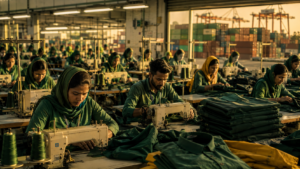
RMG built its ESG compliance infrastructure over 30 years. Leather, pharmaceuticals, and ICT are entering premium international markets for the first time — and those markets are waiting with ESG audit requirements that did not exist 10 years ago.
What the scheme’s terms do not address is the ESG compliance gap that will confront every non-RMG exporter the moment they attempt to access premium international markets. The Daily Star’s analysis of Bangladesh’s post-RMG export landscape is specific about the challenge: sectors like leather and ICT face increasingly stringent buyer ESG requirements — and they have built almost none of the compliance infrastructure that RMG developed over three decades of international pressure.
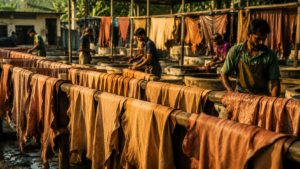
Bangladesh’s leather sector — the most obvious candidate for export diversification given the country’s RMG supply chain connections — has just 8 Leather Working Group-certified facilities. India has 334. The LWG certification covers environmental compliance, worker safety, chemical management, and supply chain traceability — it is the baseline requirement for selling premium leather goods to EU and Japanese buyers. Without LWG certification, 70% of Bangladesh’s leather exports go to China at prices 50-60% below what premium markets pay. The Savar tannery CETP still cannot process its full daily wastewater volume. The Tk 3,000 crore loan can finance a leather factory expansion. It cannot manufacture the years of compliance-building that EU buyers will require.
For the ICT sector, the compliance challenge is different but equally real. EU supply chain due diligence requirements are beginning to extend to digital services procurement. Pharmaceutical exporters face a WHO GMP environment but no systematic ESG reporting requirement — yet. Light engineering and agricultural processing face varying degrees of buyer-driven sustainability requirements depending on their target markets. The Export Diversification Fund is the right fiscal instrument. It needs to be paired with a sector-specific ESG capacity building programme — for leather, pharma, ICT, and jute — that begins now, before the first expanded order arrives and the first buyer audit begins.