A global supply chain analysis published by Texspace Today in late April 2026 maps Bangladesh’s ESG compliance infrastructure across its RMG sector with unusual comprehensiveness. The picture it assembles makes one thing very clear: Bangladesh has significantly more verified, third-party sustainability credentials than it is given credit for — and almost no national infrastructure for communicating them to the world.
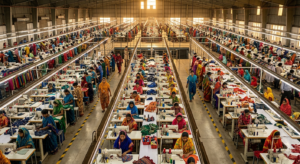
The sector generated $39.35 billion in FY2024–25, supporting between 4.4 and 5 million direct workers and nearly 20 million livelihoods across the wider supply chain. It is one of the largest and most economically significant manufacturing sectors of any developing economy. It is also — by the metrics of international sustainability certification — one of the most accredited.
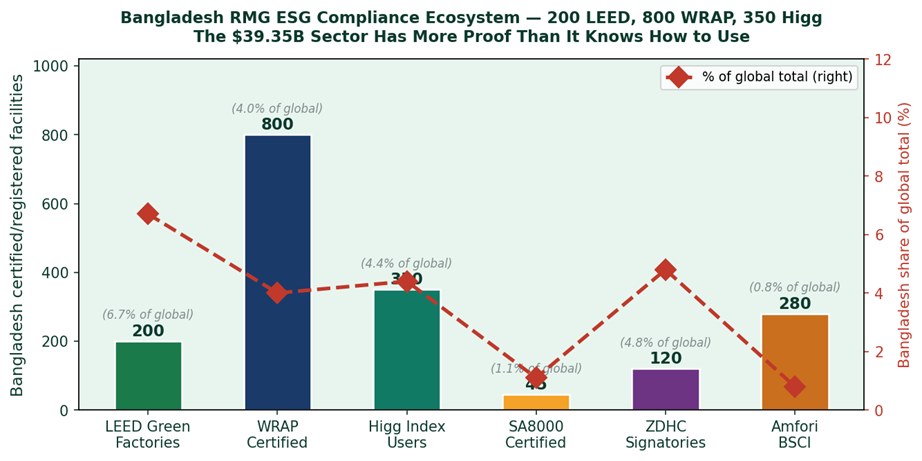
Bangladesh RMG ESG certification ecosystem — 200 LEED, 800 WRAP, 350 Higg, 120 ZDHC, 280 Amfori — and each certification’s share of the global total. The proof is real. The story is untold
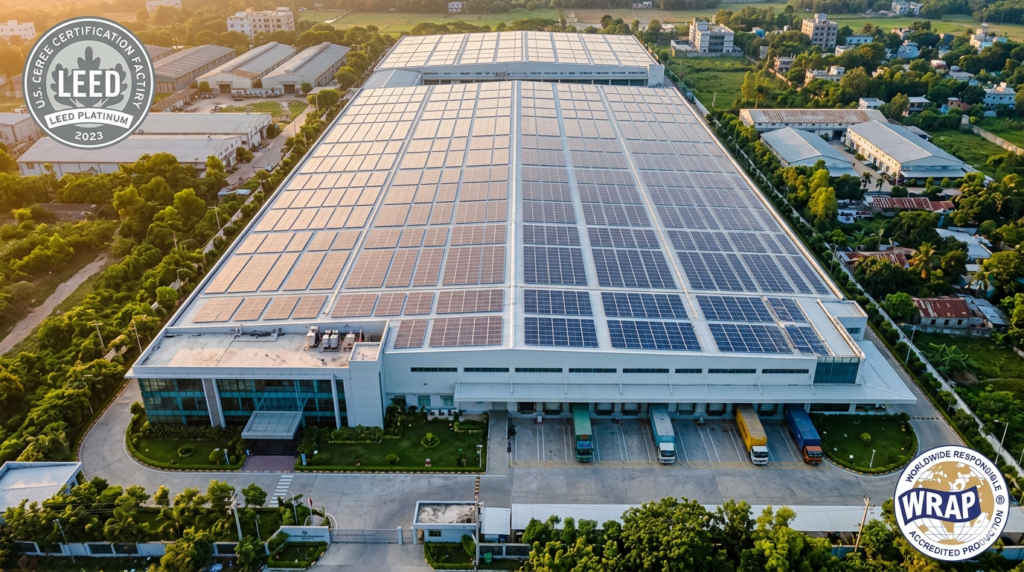
Over 200 Bangladeshi factories hold LEED certification from the US Green Building Council — more than any other garment-producing country in the world. The sector has over 800 WRAP-certified facilities, approximately 350 factories using the Higg Index self-assessment suite, 45 SA8000-certified workplaces, 120 ZDHC Programme signatories, and approximately 280 factories in the Amfori BSCI programme. These are verified, internationally recognised certifications covering environmental performance, worker rights, chemical management, and social compliance.
Bangladesh has more LEED-certified garment factories than any country. It has no national ESG data platform. Fragmented proof, for global capital markets, is the same as no proof.
The gap is not in performance. It is in aggregation and communication. Globally, 96% of G250 companies publish standardised sustainability reports that ESG rating agencies and institutional investors can access and compare. Bangladesh’s factory certifications exist in isolated silos — maintained individually, reported to specific brands, logged in private audit databases — and never assembled into a standardised national sustainability narrative readable by international capital markets.
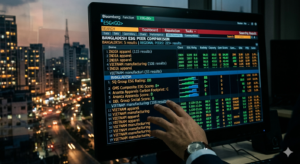
The numbers tell a stark story: out of 350 companies listed on the DSE, a mere 16 are currently visible within the Bloomberg ESG universe. The remaining 334 exist in a data blind spot—not necessarily due to a lack of merit, but because their achievements are trapped in formats that international ESG algorithms cannot read. The challenge now lies in bridging this gap: translating rigorous factory-level certifications into standardized, ISSB-aligned disclosures. By building a robust reporting infrastructure, Bangladesh can finally connect individual compliance to a powerful national narrative, allowing the country to share its hard-earned progress at the global scale the market now demands.