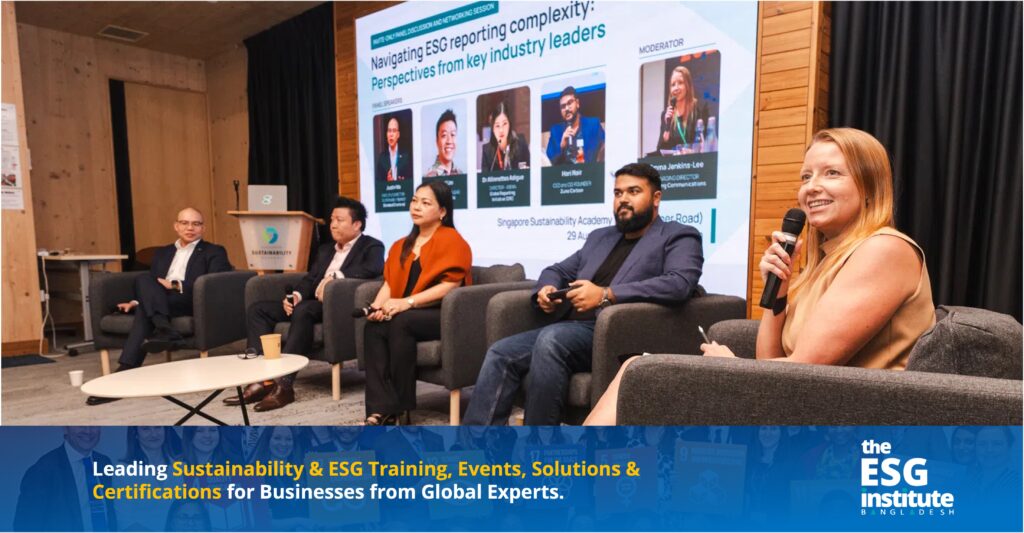
Limited budget, manpower challenges, and a lack of understanding deter small and medium-sized enterprises (SMEs) from adopting environmental, social, and governance (ESG) reporting. This issue was highlighted at the Navigating ESG Reporting Complexity event on August 29, organized by ESG management platform Zuno Carbon and Spurwing Communications, which attracted around 50 participants, mostly from SMEs.
Ong Gin Keat, director of sustainability and business development at Envcares, noted that while ESG reporting is widely discussed, many companies lack a full understanding of its implications. He emphasized the need for company-wide comprehension of the practice’s intentions.
Allinnettes Adigue, head of the Asean Regional Hub of the Global Reporting Initiative (GRI), pointed out that sustainability reporting requirements, including mandatory climate reporting, are primarily targeted at listed corporations. However, large corporations will soon need to disclose their Scope 3 emissions, which can constitute up to 70% of a company’s carbon footprint, originating mainly from supply chains. This makes ESG compliance critical for SMEs to remain competitive and sustain business relationships.
Despite significant challenges such as limited resources, expertise, and data collection complexity, Adigue stressed the importance of supporting SMEs through financing, capacity building, and increased awareness to facilitate their transition to a low-carbon economy.
Hari Nair, CEO of Zuno Carbon, highlighted the tangible benefits of sustainability reporting for SMEs. He explained that larger companies with supply chains in Southeast Asia, often consisting of SMEs, increasingly value ESG metrics and reports from their partners as ESG and sustainability issues gain prominence.
By addressing these challenges and leveraging support mechanisms, SMEs can effectively engage in ESG reporting, enhancing their competitiveness and contributing to a sustainable future.