AmCham Bangladesh president Syed Ershad Ahmed lays out the case for sustainable business growth in Bangladesh. His framing is pointedly pragmatic: shareholders demand profitability, regulators demand sustainability, and global markets increasingly refuse to treat these as separate concerns.
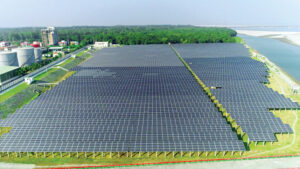
Three themes emerge as interconnected priorities. First, ESG: the challenge of adopting environmental, social, and governance principles is real, but the alternative — slow progress — attracts criticism from regulators, investors, and buyers simultaneously. A globally aligned ESG framework with standardised disclosure and consistent reporting is not an idealistic goal but a practical business requirement. Second, energy: the global renewable market is set to surpass $1 trillion by 2027, and Bangladesh has significant solar and wind potential — but unlocking it requires policy consistency and investment-grade conditions that have been intermittent. Third, logistics: the National Logistics Policy 2025 could transform supply chain efficiency, but only if implemented. Cold-chain gaps and port capacity limitations remain live constraints that raise costs for every exporter.
The convergence of ESG, energy, and logistics is not coincidence. They are the conditions that international investors evaluate before committing capital. Bangladesh has the growth story. Whether it also has the governance and compliance infrastructure to back that story up is the question every serious foreign investor is still asking.
THREE PILLARS FOR POST-LDC COMPETITIVENESS
| PILLAR 1 ESG & Sustainability Standardised disclosure and ESG alignment are moving from voluntary to mandatory for international buyers and investors. | PILLAR 2 Clean Energy Transition Solar and wind potential is large. Policy consistency and investment-grade conditions are the unlocking factors. |
| PILLAR 3 Logistics & Supply Chain National Logistics Policy 2025 can reduce costs and improve resilience — but implementation must follow announcement. | KEY RISK Governance gap Without transparent regulation and public-private coordination, each pillar remains underutilised. Discipline is the differentiator. |