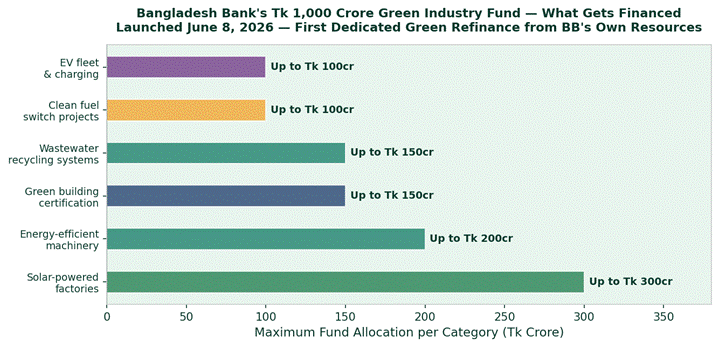
📊 Bangladesh Bank Tk 1,000 crore Green Industry Refinance Fund — 6 key eligible categories with approximate maximum allocation. First fund from BB’s own resources. Revolving structure: as loans repay, capital recycles to new borrowers.
Every green finance initiative Bangladesh has announced over the past decade has shared one structural feature: the money comes from someone else. World Bank credit lines, ADB environmental windows, bilateral donor facilities, IDCOL’s solar financing sourced from the International Finance Corporation — all of these are critical and valuable. They also all share a dependency: when the facility expires, the money stops. And they all carry a subtle signal: green finance in Bangladesh is something we do with other people’s money.
Bangladesh Bank’s June 8 launch of a Tk 1,000 crore Green Industry Refinance Fund changes that signal. For the first time, Bangladesh’s central bank is capitalising a green industry financing facility from its own resources. The fund is structured as a revolving credit facility — Bangladesh Bank provides refinance to participating commercial banks at below-market rates, those banks extend green industry loans to qualifying businesses, and as loans are repaid, the capital returns to the pool for redeployment. There is no donor expiry date. There is no external renewal requirement.
When Bangladesh Bank puts its own capital behind green industry, it sends a message that no circular from a donor facility can match: this is what the central bank believes the economy needs to become.
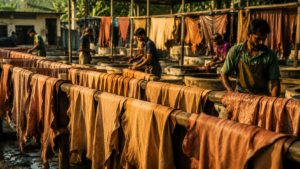
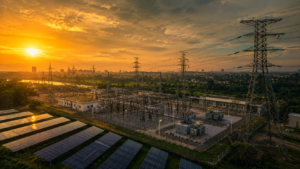
The fund covers 70 products under 11 categories under Bangladesh Bank’s existing sustainable financing taxonomy. The most commercially significant categories include solar-powered factory installations, energy-efficient industrial machinery, green building certification projects meeting LEED or EDGE standards, industrial wastewater recycling systems, clean fuel switching programmes for manufacturing operations. This breadth is deliberate: the fund is designed to support industrial sustainability across sectors, not just solar adoption in garment factories.
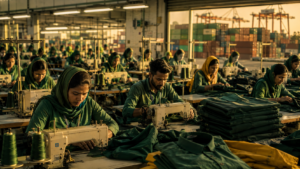
The timing is precise. Bangladesh Bank launched the Green Industry Fund the same week the FY27 budget removed solar import duties. Together, these two measures — one fiscal, one monetary — address both sides of the solar adoption equation simultaneously. The duty removal lowers the equipment cost. The refinance fund lowers the financing cost. A factory owner who previously faced a 58.6% equipment premium and 12-14% commercial lending rates now faces zero import duty and central bank-subsidised financing. The investment calculus has fundamentally shifted.
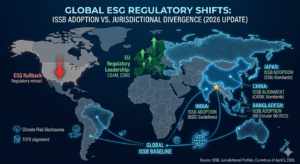
Bangladesh Bank already mandates that 5% of all loans disbursed by commercial banks must go to green and sustainable finance. The green industry fund makes it cheaper and easier for commercial banks to meet this requirement while genuinely financing industrial transformation rather than simply reclassifying existing loans. The institutions that build real expertise in green project assessment, impact measurement, and ISSB-aligned reporting for green loan portfolios will be the ones that capture this market as it grows across every sector of Bangladesh’s economy.