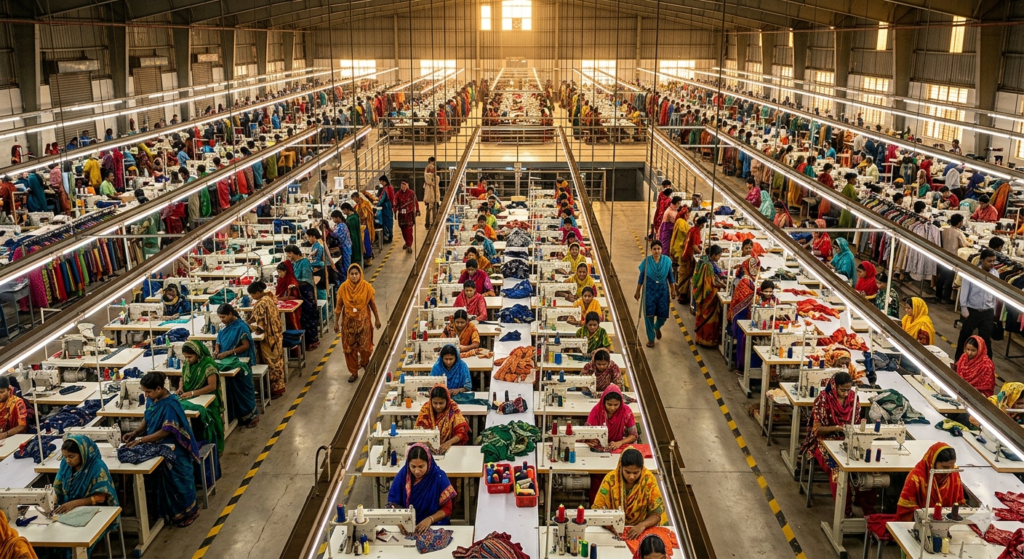
Bangladesh Has Been the World’s Second-Largest Garment Exporter for 30 Years. That’s Not a Strength Anymore

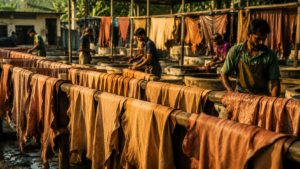
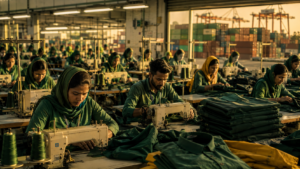
A sharp analysis published March 25, 2026 by the East Asia Forum puts the problem plainly: Bangladesh's export growth since the 1990s has been driven overwhelmingly by ready-made garments, leaving the economy highly concentrated and exposed as the country approaches LDC graduation in 2026.

Share On:

This sustained export growth is now depending on policy-driven competitiveness rather than preferential access.

In November 2026, Bangladesh loses LDC trade preferences. EU buyers will invoke CSRD and CSDDD. US buyers are under Section 301 scrutiny pressure. Every new sector Bangladesh tries to enter will be asked the same question first: where’s the ESG documentation?

Cotton dependency. Labour rights scrutiny. Carbon footprint. Traceability demands. These aren’t “sustainability issues.” They are market access conditions.

Bangladesh diversifies or it stagnates. And ESG competence is the entry ticket to every sector that comes after garments.

Source: East Asia Forum

Meet the Author

Share On:

Being read right now

Bangladesh’s Garment Sector Got Hit Three Ways in April. Solar Was the Only Shield

8–10% buyer order cuts. Diesel rationed through BGMEA cards since April 13. Dhaka–Chattagram freight up 32% — from Tk 38,000 to Tk 50,000 — since the Middle East war escalated. Three separate shocks, one sector, one month. The factories with rooftop solar kept producing. The ones on diesel generators did not. This is what the ESG business case looks like when it stops being theoretical.

Dhaka Was the World’s Most Polluted City on May 11. This Has Happened Repeatedly. Nobody Is Calling It an ESG Crisis Yet.

On May 11, Dhaka's AQI hit 174 — the world's worst that morning. From May 1 to May 14, Dhaka appeared on IQAir's most polluted cities list multiple times. Air pollution caused 159,000 premature deaths in Bangladesh in 2019 alone. The World Bank estimates the health and productivity cost at 8.3% of GDP. This is not a weather story. It is a governance failure with a price tag larger than most of Bangladesh's infrastructure programmes.

Bangladesh Exported $3.14 Billion in Garments Last Month. Now Read What That Number Is Hiding.

Bangladesh RMG exports: $3.14 billion in April 2026 — up 31.21% year-on-year. Knitwear: +30.02%. Woven: +32.65%. Technically accurate. Also deeply misleading. April 2025 was one of the worst export months in recent history: Eid shutdown, India's transshipment ban, and US tariff shock all hit simultaneously. The 31% is measured against a collapsed floor. This is a live example of exactly what ISSB disclosure standards exist to prevent: data without context.

At ESG Institute Bangladesh, learn from global and local experts in sustainable development and join a community of professionals committed to making lasting change.

ESG Corporate Workshops

Expert learning on fundamentals of ESG and Sustainability for Corporates.
Learn more

ESG Student

Workshops

University sessions by corporate, policy and development sustainability experts on SDGs, Careers and Sustainability.
Learn more

ESG & Sustainability

Corporate Training

Curated, certified training on key SDG, ESG, Sustainability and Compliance experts from around the globe designed to build professional expertise.
Learn more

ESG-Sustainability

Professional Certifications

Build your professional career in ESG & Sustainability from globally recognized certifications and accreditions.
Learn more

ESG Professional Bootcamp

Learn from ESG-Sustainability experts and network with professionals in the industry in an engaging, 2-day Bootcamp centered on intensive learning on ESG and Sustainability for corporates.
Learn more

Contact Us

Contact the ESG Institute Bangladesh below, or send your contact information to request a callback from our representative.

Address

6th Floor, BIMS Bhaban, GA-9/3, Progoti Sharani, Dhaka-1212

Email

info@esginstitutebd.com

Call Us

+8801626658248