Bangladesh Wants to Sell Carbon Credits. It Must Prove They’re Real

The prime minister has ordered an emissions-cutting plan, and the first Article 6 authorisation for a cooking programme has arrived. With COP31 weeks away, Bangladesh is seeking climate finance and offering carbon credits. Both depend on credible measurement.

Share On:

Bangladesh is trying to do two things at once on the world climate stage. It wants to ask for finance, and it wants to offer credits.

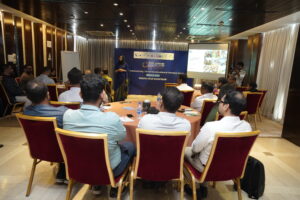
Prime Minister Tarique Rahman held a meeting that directed the preparation of a plan to cut emissions and strengthen Bangladesh’s carbon-credit potential. She asked for a strategy to use the international market, transparency in carbon credit management, a reliable database and closer coordination with international organisations.
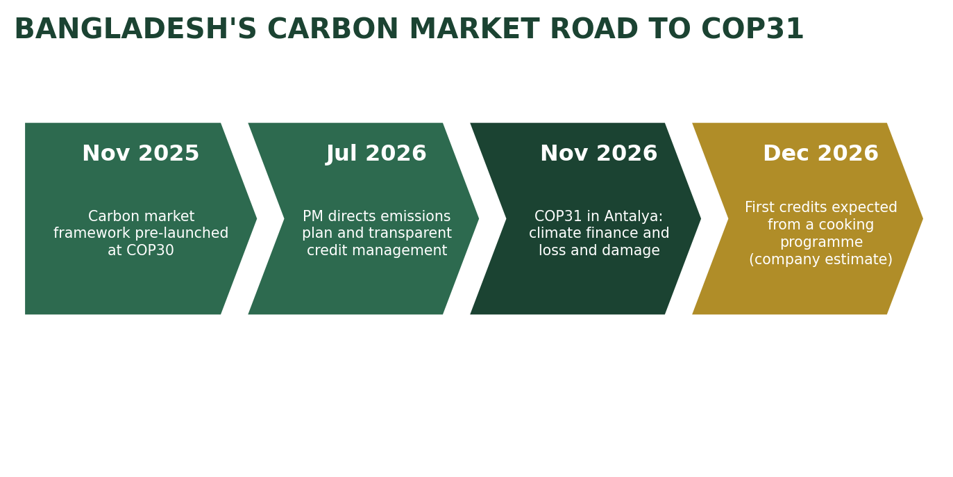
Milestones on Bangladesh’s carbon market and climate finance path

A practical sign has followed. ATEC says it received a Letter of Authorization from the Ministry of Environment, Forest and Climate Change allowing emission reductions from its Electric Cooking Program, which provides induction stoves in the Chattogram division, to be transferred internationally under Article 6.2 of the Paris Agreement. The company expects 1.29 million tonnes of CO2-equivalent reductions by 2030 under Gold Standard’s metered and measured methodology, with the first credit issuance expected in December 2026. It describes itself as the first clean cooking developer in Bangladesh to win such approval.

The framework behind it was previewed at COP30 in November 2025, when Bangladesh held a pre-launch session on how emission reductions would be generated, authorised and traded under Article 6 and the voluntary carbon market.

Clear regulations, transparent monitoring and institutional capacity- carbon credits, it argued, must complement real climate action in renewable energy, efficiency, forests and wetlands.

COP31 is set for Antalya in November. Dhaka has said it will bring a special agenda seeking stronger climate finance. The prime minister’s stated priorities include moving the Loss and Damage Fund from promise to delivery and making climate finance more accessible and concessional. Civil society groups are preparing a position paper urging loss and damage to take centre stage.

Both sides of Bangladesh’s pitch rest on the same foundation. A tonne of carbon is only worth something if somebody can measure it, verify it and defend the number. The same is true for a request for climate finance: donors will want to see what the money changed. That means people who can do greenhouse gas accounting, verification and credible reporting.

Meet the Author

Share On:

Being read right now

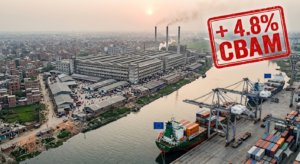
Bangladesh RMG Exports May Face 4.8% EU Carbon Tax After 2030

Your factory passed its audit. Your compliance paperwork is filed. Your buyer is happy. And yet, by 2030, you may be paying an extra 5% on every shipment to Europe — not because you broke a rule, but because you never learned to measure your carbon.

The EU Just Watered Down Its Supply Chain Law – Don’t Relax Yet

Brussels has slashed the reach of its landmark human rights and environmental due diligence law, pushing enforcement to 2029 and shrinking its scope by roughly 70%. For Bangladeshi exporters, the legal net just got smaller — but European buyers are already writing the same expectations into their own contracts.

Bangladesh Bank Put Tk 1,000 Crore Behind Green Industry. That Changes the Signal.

Every previous Bangladesh green finance scheme channelled donor or foreign credit line money. This one is different. Bangladesh Bank's new Tk 1,000 crore Green Industry Refinance Fund is capitalised from the central bank's own resources. It covers 70 categories of green products and projects. It is a revolving fund — capital replenishes as loans are repaid. When the central bank puts its own balance sheet behind green industry, every commercial bank in the country receives a message about where priorities...

Borrow at 5%. Build Green. Banks Begin to Sign Up.

Southeast Bank has joined Bangladesh Bank's Tk1,000 crore refinance scheme for green industries and green factory buildings. Banks draw the money at 2% and can lend it on at no more than 5%. The funding exists. The next test is who can prove they qualify.

At ESG Institute Bangladesh, learn from global and local experts in sustainable development and join a community of professionals committed to making lasting change.

ESG Corporate Workshops

Expert learning on fundamentals of ESG and Sustainability for Corporates.
Learn more

ESG Student

Workshops

University sessions by corporate, policy and development sustainability experts on SDGs, Careers and Sustainability.
Learn more

ESG & Sustainability

Corporate Training

Curated, certified training on key SDG, ESG, Sustainability and Compliance experts from around the globe designed to build professional expertise.
Learn more

ESG-Sustainability

Professional Certifications

Build your professional career in ESG & Sustainability from globally recognized certifications and accreditions.
Learn more

ESG Professional Bootcamp

Learn from ESG-Sustainability experts and network with professionals in the industry in an engaging, 2-day Bootcamp centered on intensive learning on ESG and Sustainability for corporates.
Learn more

Contact Us

Contact the ESG Institute Bangladesh below, or send your contact information to request a callback from our representative.

Address

6th Floor, BIMS Bhaban, GA-9/3, Progoti Sharani, Dhaka-1212

Email

info@esginstitutebd.com

Call Us

+8801626658248