Bangladesh’s green transition has a hiring problem that few people are talking about: the visible skills are in demand, and the invisible ones are missing.
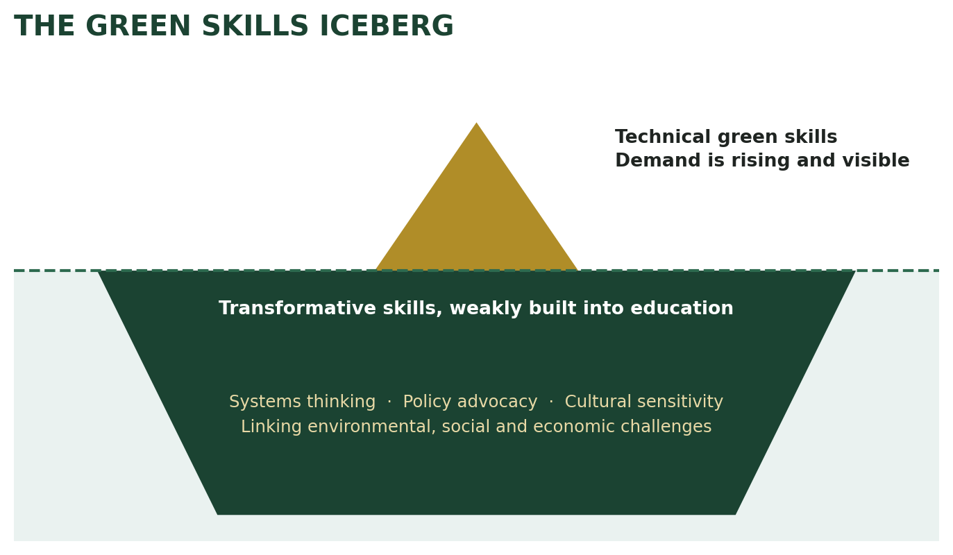
Skill categories described in the ULAB, IUB and BRAC University study on green skills in climate education.
A study by researchers at ULAB, Independent University Bangladesh and BRAC University, published in World Development Sustainability, examined green skills in climate education in Bangladesh and the wider Global South. It found that demand for technical green skills is increasing, but that education and training systems fail to develop the broader competencies an inclusive and sustainable green transition requires.
Those broader competencies are not exotic. The study names systems thinking, policy advocacy, cultural sensitivity and the ability to see the links between environmental, social and economic challenges. It found them weakly integrated into curricula. Technical know-how, in other words, is the tip of the iceberg. What sits below the surface decides whether a company or a country can actually carry out a transition.
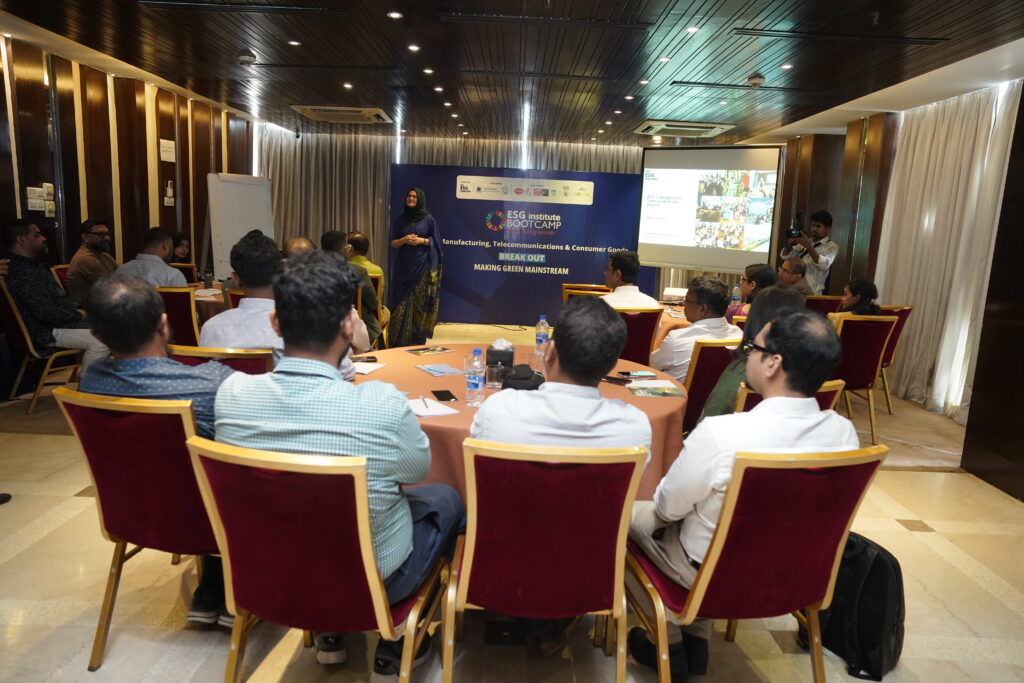
Practitioners say the same thing thatBangladesh lacks qualified ESG professionals, with only a handful of local consultants, they recommended a national ESG training programme for bankers, regulators, auditors and listed companies. Separately, reporting on the labour market notes that nearly half of workers say they want short-term technical training.
Meanwhile, demand is being created by regulators faster than supply of people. The Financial Reporting Council has adopted IFRS S1 and S2. Bangladesh Bank sets green and sustainable finance targets for every bank. BSEC has drafted governance rules that put ESG disclosure on the audit committee’s agenda. Each rule creates a job that someone must do.
Every one of those jobs asks for more than a certificate in a single technical topic. They ask for people who can read a standard, collect messy data, challenge a number, talk to a regulator and explain the result to a board.
The study’s finding is a useful warning: a country can build its rulebook faster than it builds its people. Closing that gap takes training that is practical, linked to real reporting work, and honest about the soft skills that hold everything together.