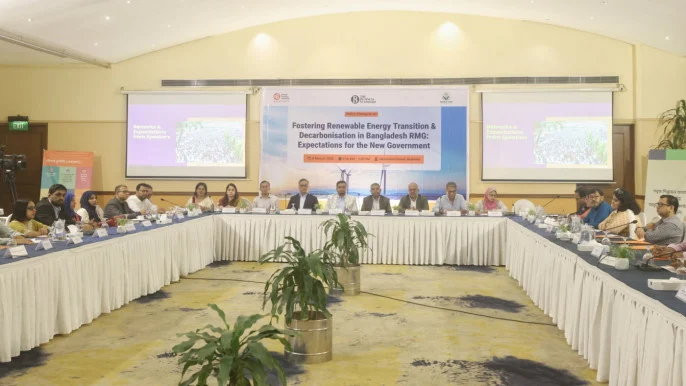
Industry leaders, sustainability experts, and labour representatives gathered at a multi-stakeholder policy dialogue in Dhaka on March 31 — co-organised by The Business Standard, the Ethical Trading Initiative Bangladesh, and the Worker-led Climate Action Network. Their message was unanimous: Bangladesh’s RMG sector is ready to invest in renewable energy, but the infrastructure isn’t there yet. Manufacturers are asking the government to create designated ‘Solar Zones’ — centralised land allocations modelled on China and Taiwan — so that factories too space-constrained for rooftop solar can still access clean power.
The urgency is real. TBS Senior Executive Editor Sharier Khan put it plainly at the event: if a 5% EU carbon tax is layered on top of post-LDC tariffs after 2030, the total tax burden on Bangladesh’s RMG exports to Europe could reach 17%. For an industry already operating on margins under 10%, that is not a warning — it is an existential calculation.
Meanwhile, the event saw the launch of an ETI-BRAC University case study report documenting 15 factories that have successfully adopted renewable energy measures. The models exist. The question is scale.
The Bangladesh Context
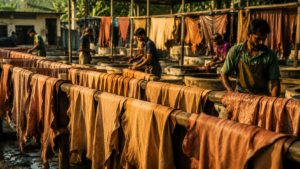
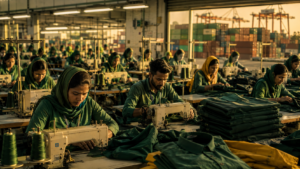
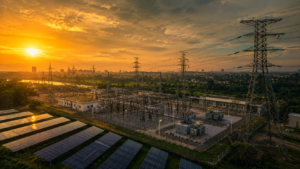
Bangladesh has more than 7,000 RMG factories. Combined rooftop capacity alone could generate 5,000 MW of solar electricity, according to IDCOL. And yet, as of early 2026, renewable energy accounts for just 4.5% of the country’s installed power capacity. The gap between potential and practice is not technological — it is institutional, financial, and skills-based.
Syeda Afzalun Nessa, Head of Sustainability at HSBC Bangladesh, said at the dialogue: ‘A coordinated ecosystem approach is essential to unlock capital for renewable energy transition and decarbonisation in Bangladesh’s RMG sector.’ Capital follows credibility. Credibility requires data. And data requires trained people who understand carbon accounting, scope emissions, and sustainability reporting frameworks.
BANGLADESH RMG: CARBON & COMPLIANCE PRESSURE POINTS
| LEED-certified factories | █░░░░░░░░░░░░░░░░░░░ | 230 factories |
| RMG factories (total) | ████████████████████ | 7000+ |
| Potential solar from rooftops | ██████████████░░░░░░ | 5000 MW |
| Current renewable % of power | ░░░░░░░░░░░░░░░░░░░░ | 4.5% |
| EU export share of RMG | ░░░░░░░░░░░░░░░░░░░░ | 73% |
| Post-LDC+CBAM tax risk | ░░░░░░░░░░░░░░░░░░░░ | 17% |
Figure 1: The scale of Bangladesh’s RMG decarbonisation opportunity — and exposure
What This Means for Professionals
Factories that want to access blended finance, carbon credits, or remain on the approved supplier lists of major European brands will need people who can speak the language of Scope 1, 2, and 3 emissions — and document it credibly. That language is not learned on the factory floor. It is learned in structured training environments that combine framework knowledge with practical application.
The transition is happening. The question is whether Bangladeshi professionals and companies will lead it — or scramble to catch up when buyers start asking for the numbers.
Watch the full Roundtable here.
ESG Institute Bangladesh is Bangladesh’s only dedicated ESG education and advisory institute. We offer professional certification, corporate training, and sustainability reporting advisory built specifically for the Bangladesh context. The ESG Excellence Awards Bangladesh 2026 recognise organisations already building this future. Applications open now.
Professional Trainings (Diploma, Accreditations, In-Depth Workshops): https://esginstitutebd.com/| Join the 2026 ESG Awards: esgawardsbd.com