Bangladesh faces annual climate financing needs estimated at USD 26 billion — roughly equivalent to 3% of its GDP. Despite persistent policy efforts and a track record of climate action that is exceptional for a country responsible for under 0.56% of global emissions, the financing gap between ambition and reality remains vast. At COP30 in November 2025, world leaders warned that adaptation financing remains dangerously insufficient for the most climate-vulnerable nations. Bangladesh ranks 9th among the most climate-exposed countries on earth.
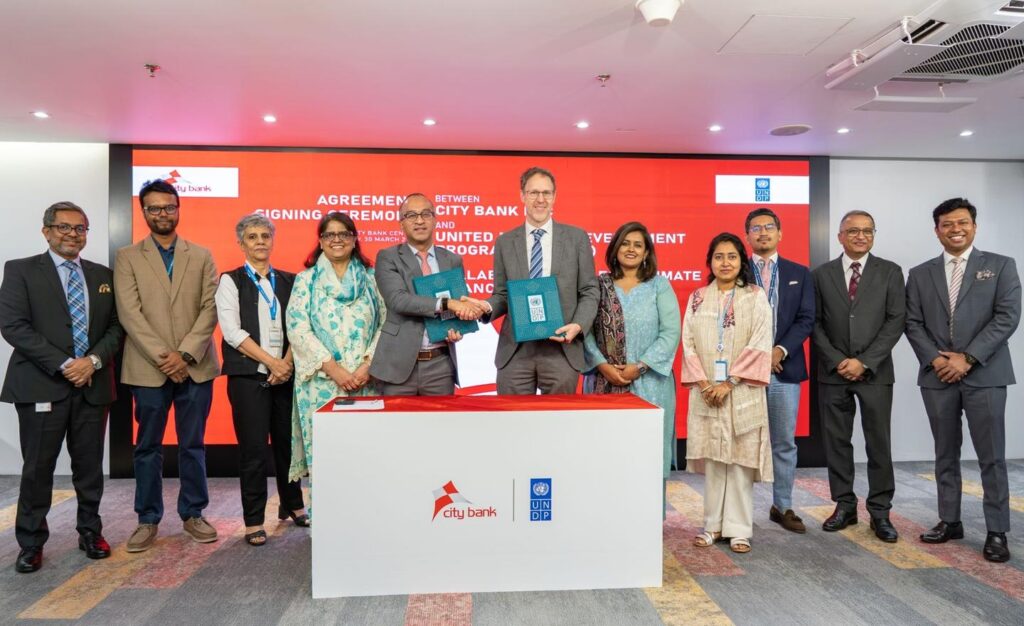
In response, the Finance Division of Bangladesh’s Ministry of Finance and UNDP Bangladesh began a structured national consultation process in late 2025 to develop the country’s first National Climate Finance Strategy. Simultaneously, on March 31, 2026, UNDP and City Bank PLC signed an MoU to issue Bangladesh’s first commercial green bond — the private sector dimension of the same strategic direction. The strategy, when finalised, will cover blended finance, green bonds, sustainability-linked loans, insurance solutions, and public-private partnerships.
AKM Sohel, Additional Secretary at the Finance Division, stated at the consultation launch: ‘A clear Climate Finance Strategy will help us navigate this imbalance, develop bankable projects, and position Bangladesh to secure the financing necessary for long-term resilience.’ Bangladesh Bank’s Executive Director added: ‘As we shift to a low-carbon development path, sustainable and climate finance becomes pivotal.’
The Bangladesh Context
Three regulatory forces are converging in 2026. First, Bangladesh’s LDC graduation on November 24, 2026, removes trade preferences and concessional finance access that the country has depended on. Second, Bangladesh Bank has mandated IFRS S1 and S2 disclosure for all banks and financial institutions, scaling through a phased implementation to 2027. Third, BSEC is revising the Corporate Governance Code to make ESG reporting mandatory for listed companies.
Each of these changes requires people who understand sustainable finance, climate risk disclosure, and ESG reporting frameworks. Strategy documents, regulatory frameworks, and green bonds are only as effective as the professionals tasked with implementing them. Right now, that talent pipeline is the most critical bottleneck in Bangladesh’s climate finance readiness.
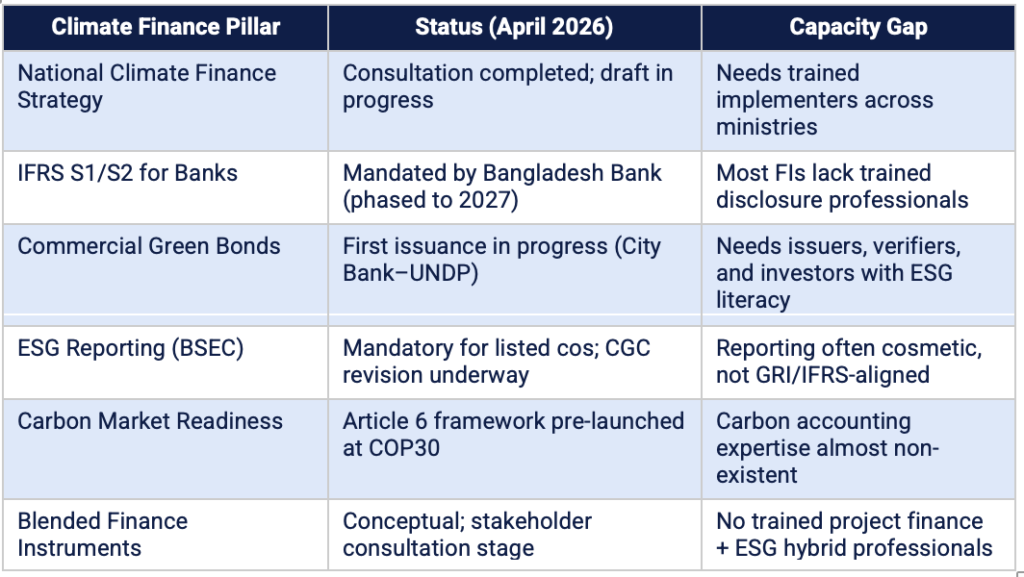
Figure 5: Bangladesh’s climate finance architecture is being built — but the professional capacity to operate it lags at every level
The Professional Imperative
Strategies written without trained implementers are archived, not executed. Bangladesh’s climate finance moment is arriving faster than its capacity to act on it. The organisations and professionals who move now — building credentials in sustainability reporting, carbon management, and ESG audit — will be the ones sitting at the tables where the $26 billion is allocated, managed, and disclosed.
The window is not infinite. LDC graduation is seven months away. IFRS S1/S2 implementation scales through 2027. The Corporate Governance Code revision is imminent. Each of these creates demand for ESG-trained professionals across banking, corporate, and public sector institutions. That demand will not wait for the training market to catch up on its own.
ESG Institute Bangladesh is Bangladesh’s only dedicated ESG education and advisory institute. We offer professional certification, corporate training, and sustainability reporting advisory built specifically for the Bangladesh context. The ESG Excellence Awards Bangladesh 2026 recognise organisations already building this future. Applications open now.
Professional Trainings (Diploma, Accreditations, In-Depth Workshops): https://esginstitutebd.com/| Join the 2026 ESG Awards: esgawardsbd.com