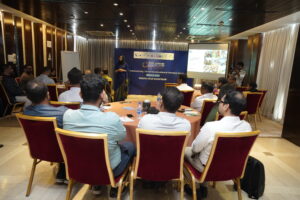
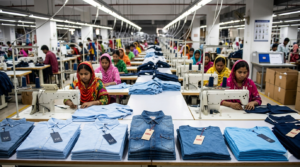
On 24 September, Southeast Bank PLC signed a participation agreement with Bangladesh Bank under the central bank’s Tk1,000 crore refinance scheme for green industries and green factory buildings. Under the deal, the bank will finance eligible clients at a preferential rate set by the central bank’s refinancing guidelines.
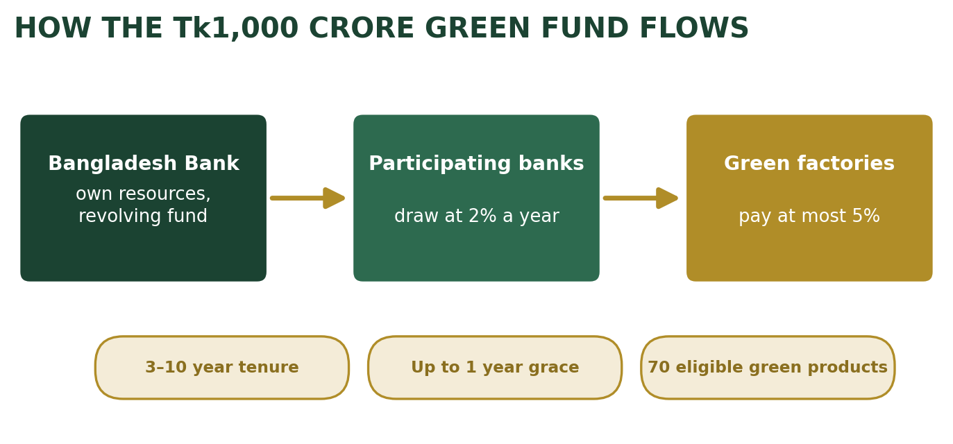
Structure of Bangladesh Bank’s revolving green refinance scheme, launched in June 2026.
The scheme itself was launched in June. It is a revolving fund drawn from Bangladesh Bank’s own resources. Participating banks and financial institutions borrow at 2% a year and may charge end borrowers no more than 5%. Loans can run three to ten years, with up to one year of grace before repayments begin. Repayment follows the Fixed Principal Method, and lenders may not add hidden charges beyond government taxes.
The fund sits inside the central bank’s sustainable financing framework, which lists 70 eligible green products and projects. Access is broad. Conventional banks, Islamic banks and foreign commercial banks can take part if their classified loan ratio stays under 10%, with some flexibility up to 15% for strong performers. State-owned banks are automatically eligible.
So the pipe from the central bank to the branch is being laid, bank by bank. Southeast’s signature is a small but telling signal that lenders see the scheme as worth joining.
Cheap money, though, is not the same as bankable projects. A loan under this scheme only flows to a project that fits one of the eligible green categories. Someone has to describe what makes a factory green, document it in a form the bank’s risk team accepts, and show how it will be verified. For a borrower, that is a technical file. For a loan officer, it is an appraisal skill. Neither appears by itself.
The wider data shows why this matters. Green finance makes up only 8% of total sustainable finance in the latest quarterly figures, and analysts say climate investment is yet to gain real traction.
A 5% rate can lower the cost of going green. It cannot create the people who know how to apply for it. The factories and lenders that build that skill first will use this fund. The rest will read about it.