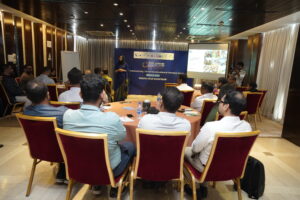
In August, falling gas pressure forced Bangladesh’s garment factories to cut output by 30-40%, and by as much as 60% in specialised processing units. Dyeing, washing and finishing took the hardest hits. BGMEA held an emergency meeting with the Buyers Forum Bangladesh.
Then came a twist that goes beyond supply. Buyers began asking for hard data on factory energy sources, generator fuel logs and compliance records. In other words, the gas crisis is also becoming a disclosure test.
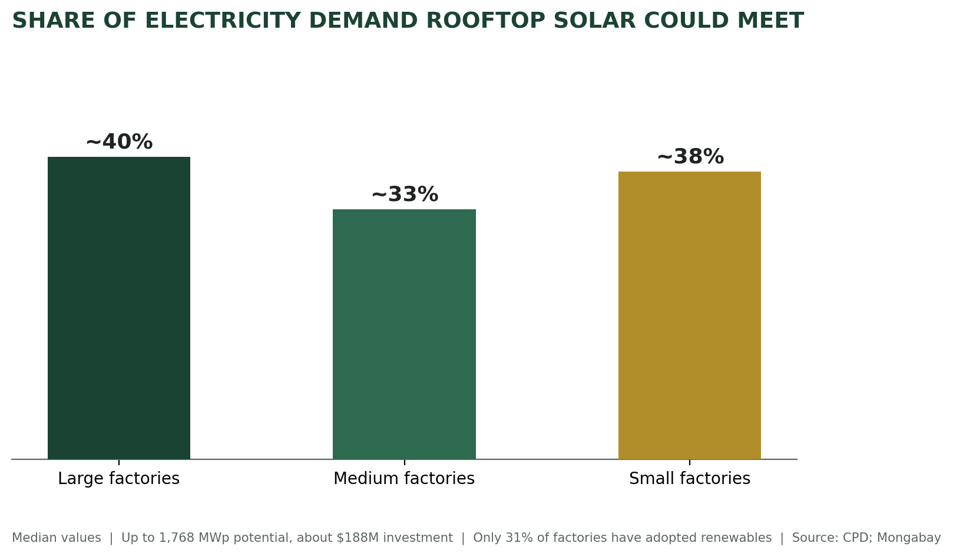
Median share of electricity demand that rooftop solar could meet, by factory size, from the CPD study of 337 factories.
The wider power picture is strained. A CPD study notes that Bangladesh’s installed generation capacity is about 29,500 MW, yet fuel shortages limit actual generation to roughly half. The problem deepened after an accident at a floating LNG terminal in Cox’s Bazar.
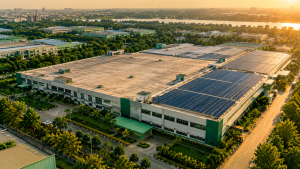
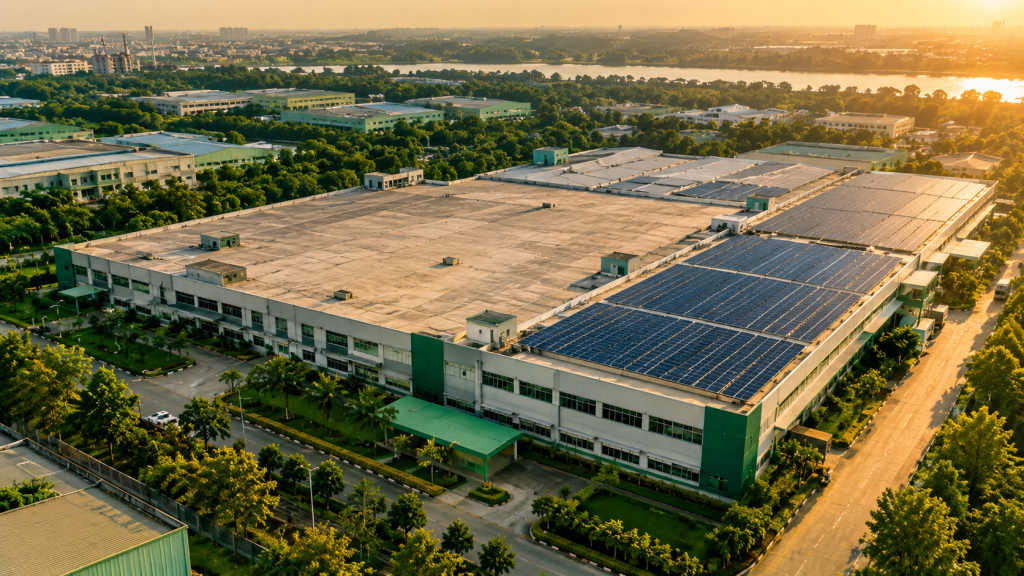
The same CPD study points to an unused asset: factory roofs. It estimates that garment factories could host up to 1,768 MWp of rooftop solar. For the factories it examined, that could meet a median of about 40% of electricity demand at large factories, 33% at medium factories and 38% at small ones. The study puts the investment needed at about $188 million.
Adoption lags. A Mongabay report finds that only 31% of garment factories have adopted renewable energy, with very low average capacity, among more than 3,320 active factories. One factory it describes failed to secure financing. Industry voices point to financing, taxes on components and a shortage of technical support. In April, BGMEA asked the government to cut duties on solar equipment, which range from 28.73% to 61.80%, to 1%.
Short-term fixes are on the table: prioritised gas supply for hubs such as Narayanganj, Gazipur and Savar, dual-fuel systems, and a repaired Maheshkhali floating terminal. But the buyer questions will outlast the crisis.
A factory that can show its energy mix, fuel logs and renewable share can answer them. One that cannot may find orders going to a competitor that can. Energy is no longer only a line on the utility bill. It is a line in the disclosure.