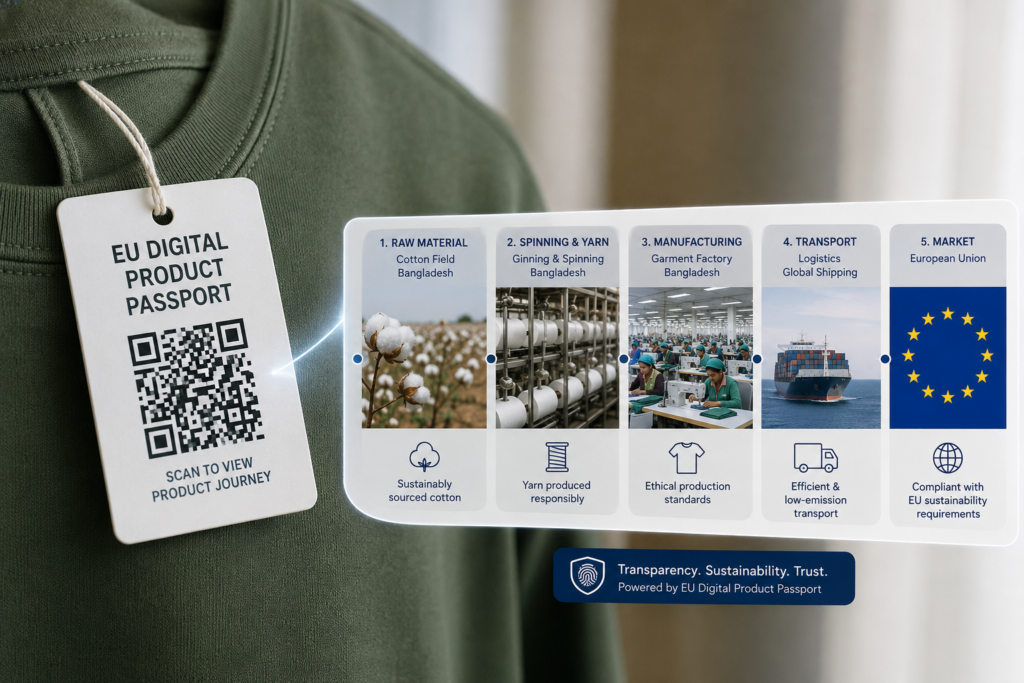
From 2027, every textile and apparel product entering the European Union must carry a Digital Product Passport (DPP) — a scannable, tamper-proof record of the product’s material origin, production journey, and environmental footprint. For Bangladesh, with EU exports reaching $19.7 billion in FY2024–25 and accounting for 50.1% of all exports to the world, this is an existential compliance requirement.
BGMEA has moved. In May 2026, it signed an MoU with Dutch traceability platform AWARE to introduce blockchain-based Digital Product Passports across Bangladesh’s 4,000 registered garment factories. Factories retain ownership of their own data.
The challenge is structural. More than 85% of Bangladesh’s garments are made from imported fibres and yarns. Under DPP, brands need verified proof of those materials’ origins — and a UNIDO study covering 104 textile companies found Bangladesh significantly trails in cross-supply-chain data sharing, EU regulatory understanding, and digital traceability infrastructure. Implementation will increase operational costs. Smaller factories face the largest relative burden.
The upside is real but conditional. Companies that successfully adopt DPP compliance will strengthen buyer relationships and secure longer-term sourcing contracts. Bangladesh has 268 LEED-certified factories — the groundwork of a credible sustainability story exists. The question is whether the sector can extend that story from building certification into full supply chain transparency, fast enough to meet the 2027 entry requirements.