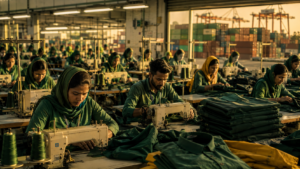
Bangladesh’s economic story is one of remarkable, narrow success. A country that once exported almost nothing now earns over 80% of its foreign exchange from one sector — ready-made garments. That concentration, once a strength, is now a structural vulnerability. LDC graduation, scheduled for November 2026, will begin eroding the preferential market access that made cheap garments viable. Post-graduation tariffs in the EU alone could reach 9–12%, potentially costing up to $7 billion in annual exports.
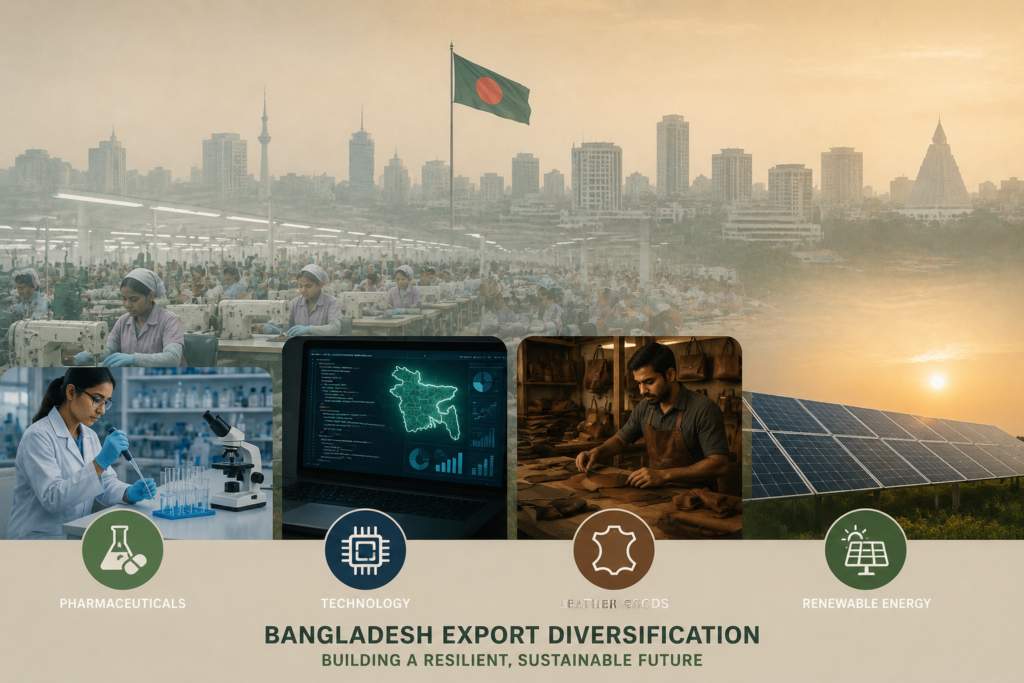
Economist M.G. Quibria, writing in The Daily Star, argues the answer lies in selective industrial policy. His seven candidate sectors: pharmaceuticals and APIs, light engineering, ICT and digital services, leather and footwear, shipbuilding, agribusiness and food processing, and green and renewable energy.
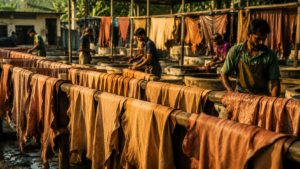
Each sector faces a different compliance bottleneck. Leather exporters are blocked by environmental certification gaps. Pharma faces a TRIPS waiver cliff when LDC status expires — insulin prices could rise eightfold. ICT has talent but lacks the industry-linked ecosystem to convert freelancers into credible export revenues. None of these problems are solved by removing tariffs alone.
The warning from history is sobering. Bangladesh’s Export Development Fund ran for three decades, cost billions, and diversified exports by essentially zero. It lacked performance conditions, accountability, and insulation from political capture. Whatever comes next must be built differently — with real conditionality, transparent monitoring, and the institutional capacity to know when something is not working and stop it.
SEVEN SECTORS — COMPLIANCE READINESS AT A GLANCE
| Sector | Export Value | Key ESG / Compliance Barrier | Urgency |
| Pharmaceuticals | 166-country reach | TRIPS waiver expires post-LDC; 85% API imports | High — 2033 cliff |
| Leather & Footwear | $620M (FY2024–25) | No shared effluent-treatment infrastructure | High |
| ICT & Digital Services | $724.6M vs $5B target | Weak university-industry linkage | Medium |
| Light Engineering | Large domestic base | Missing shared testing & certification infra | Medium |
| Shipbuilding | $200M confirmed orders | Access to long-term patient capital | Medium |
| Agribusiness | High potential | Cold-chain gaps; food safety certification | Growing |
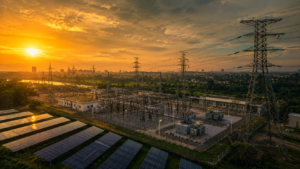
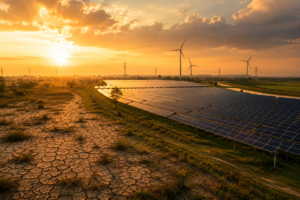
| Green Energy | Cross-cutting | Policy instability; low renewable capacity | Growing |