The Number Nobody Is Talking About
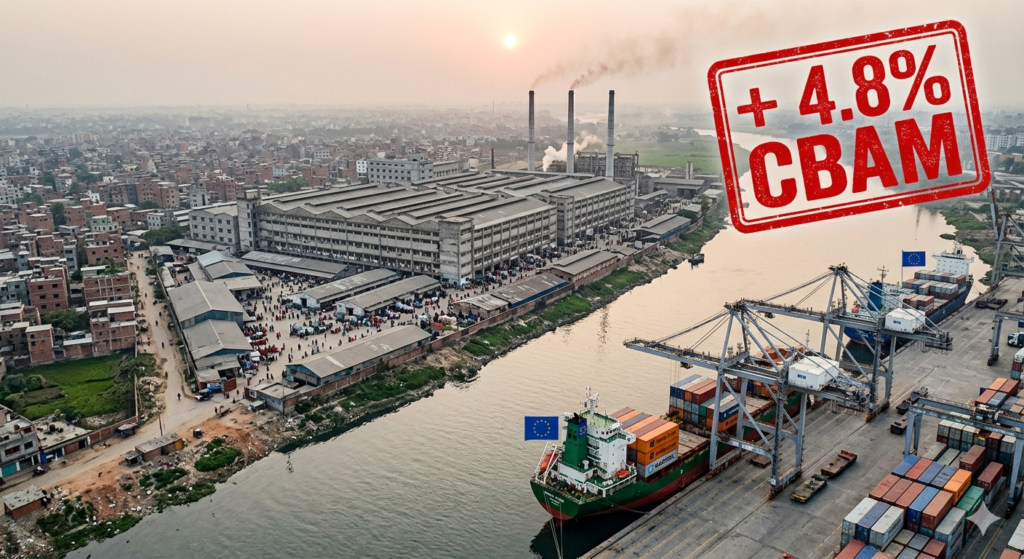
A new study by the Centre for Policy Dialogue, published on 29 March 2026, dropped a figure that should be on the front page of every business newspaper in Bangladesh: 4.8%.
That is the potential carbon tax Bangladesh’s garment exporters could face from the European Union under its Carbon Border Adjustment Mechanism — commonly called CBAM — if emission levels in the sector are not reduced before 2030.
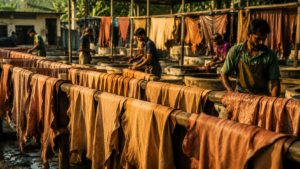
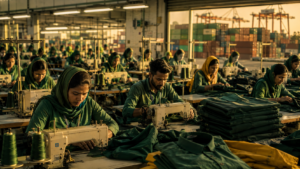
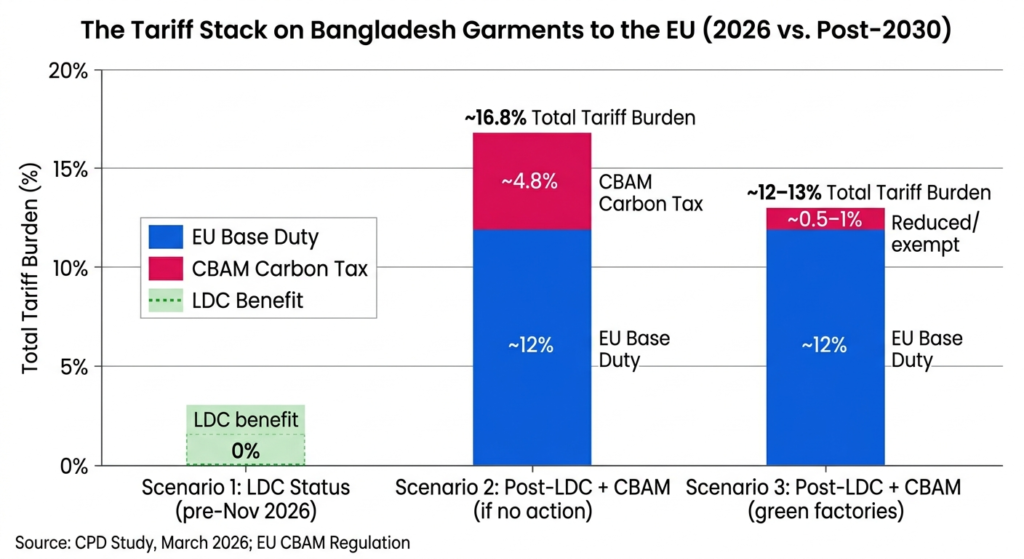
To understand why this matters, consider the arithmetic. The EU is Bangladesh’s largest export market. Garments account for more than 80% of our total exports. The EU takes more than half of those garments. Now layer on top of this that Bangladesh graduates from Least Developed Country status in November 2026, which means we lose duty-free access to the EU. The existing average EU import duty on apparel is approximately 12%. Add a 4.8% carbon tax, and you are looking at a combined tariff burden approaching 17% on our most important products going to our most important market.
That is not a future risk. That is a present emergency dressed in future language.
What CBAM Actually Means for a Factory Owner
CBAM is not a punishment for being Bangladeshi. It is a price signal — the EU’s way of ensuring that companies importing goods into Europe pay a carbon cost equivalent to what European manufacturers pay under the EU’s own carbon pricing system.
From January 2026, CBAM already applies to cement, fertiliser, and steel. The EU plans to expand coverage to all imported goods — including apparel — by 2030. If a Bangladesh garment factory cannot demonstrate that its production process meets a certain emissions standard, the importer in Germany or France will pay the difference at the border. And they will pass that cost back to the supplier in Dhaka or Chittagong.
The factories that survive this will be the ones that can measure, report, and reduce their carbon footprint before the deadline arrives. The factories that cannot will lose orders — quietly, commercially, without drama.
The Green Factory Myth
Bangladesh often points proudly to its LEED-certified factories — over 230 of them, more than any other country in the world. This is genuinely impressive. But LEED certification and carbon accounting under CBAM are different things.
LEED measures building efficiency, water use, and construction materials. CBAM will measure Scope 1 and Scope 2 greenhouse gas emissions from production processes — energy consumed, fuel burned, electricity sourced. A factory can be LEED Platinum and still be CBAM non-compliant if it runs on grid power from fossil fuel sources and has never calculated its emissions.
The BGMEA president has said factories are already moving toward 30% renewable energy. That is the right direction. But renewable energy adoption is not the same as emissions reporting. You need both — the action and the documentation — and right now, most factories have neither.
The Capacity Gap Is the Real Crisis
Here is what the CPD report does not say explicitly but what is obvious to anyone working in this space: Bangladesh does not have enough trained professionals who can do carbon accounting, Scope 1 and Scope 2 measurement, or CBAM-aligned reporting.
The factories that will escape the 4.8% tax are the ones whose sustainability managers understand carbon accounting. The banks financing those factories will increasingly need to understand climate risk. The auditors certifying those reports will need to know GRI and IFRS S2.
Training is not a soft investment. It is a hard competitive advantage.
What You Should Do Right Now
The CPD report recommends fiscal incentives, subsidised loans, and government policy. Those will come — slowly, bureaucratically, eventually. What you can control is your own organisation’s readiness.
If you work in RMG, or finance RMG, or audit RMG, or advise RMG — your job description just got a carbon chapter added to it. The question is whether you will write it yourself or have it written for you by a buyer’s compliance team in Amsterdam.
ESG education is no longer a career enrichment option. For Bangladesh’s export economy, it is survival infrastructure.
ESG Institute Bangladesh is Bangladesh’s only dedicated ESG education and advisory institute. We offer professional certification, corporate training, and sustainability reporting advisory built specifically for the Bangladesh context. The ESG Excellence Awards Bangladesh 2026 recognise organisations already building this future. Applications open now.
Professional Trainings (Diploma, Accreditations, In-Depth Workshops): https://esginstitutebd.com/| Join the 2026 ESG Awards: esgawardsbd.com