
Bangladesh Could Earn $1 Billion a Year from Carbon Markets. The Problem Is Nobody Will Buy Credits They Cannot Verify.
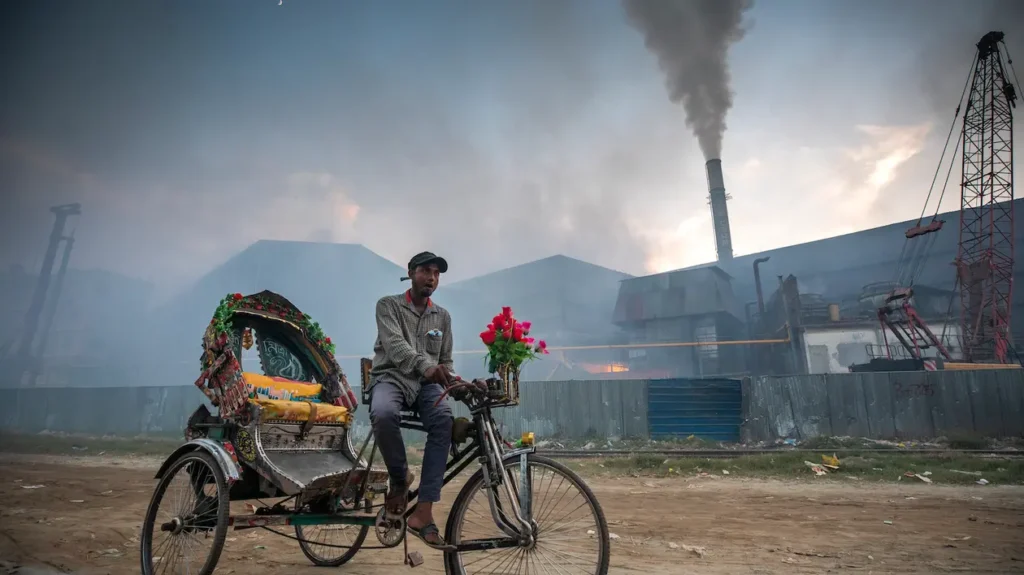
In April 2026, Thailand transferred 49,717 verified carbon units ITMOs to Switzerland under Article 6 of the Paris Agreement. The transaction happened because Thailand built the measurement, reporting, and verification system that made the credits trustworthy. Bangladesh is planting 250 million trees and targeting $1 billion in annual carbon revenue. Without a functioning MRV system, those trees generate carbon, not credits
Bangladesh’s FY27 Budget Is Being Written Now. Civil Society Has One Ask: Stop Letting Climate Finance Shrink.
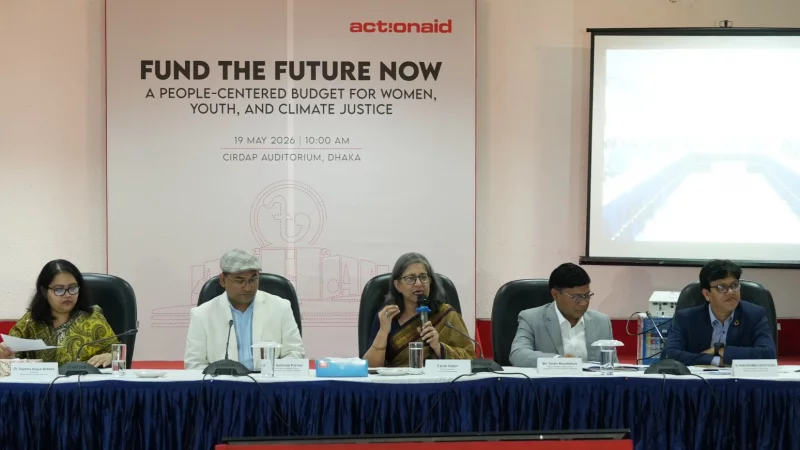
Bangladesh’s climate budget for FY26 was Tk 41,209 crore 10.07% of the national budget. That sounds significant. It has also been falling as a share of GDP every year since FY20. The environment ministry received just 0.3% of the total budget. 88% of climate finance came from foreign loans and grants. At a May 19 dialogue, the PM’s special assistant confirmed carbon trading could generate $1 billion annually. Civil society’s demand: build the domestic fiscal architecture to match the climate ambition. The FY27 budget is the test.
Bangladesh’s Banks Have the Policies. They Don’t Have the People
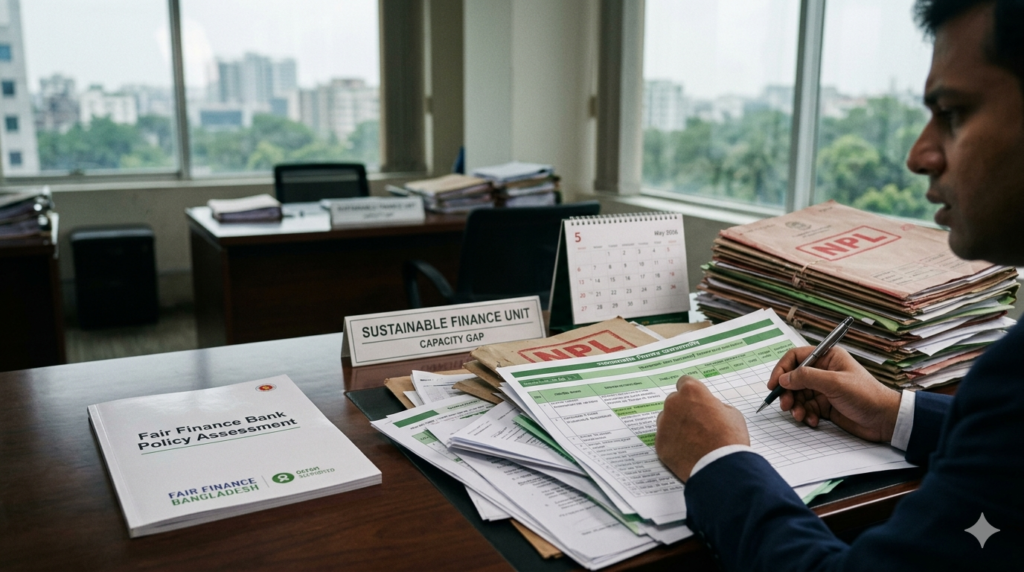
While Bangladesh Bank has successfully established one of South Asia’s most progressive sustainable finance frameworks, a newly released landmark ESG report card reveals a staggering execution gap. The country’s top sustainability-rated banks met just 11.6% of their annual green finance targets in 2025. The core issue isn’t the regulatory architecture, it is an acute shortage of trained, credentialed professionals capable of turning policy into portfolio reality amid a banking sector already strained by record-high non-performing loans.
A New Report Puts a Number on What Climate Inaction Will Cost Bangladesh. It Is Larger Than Most People Think.
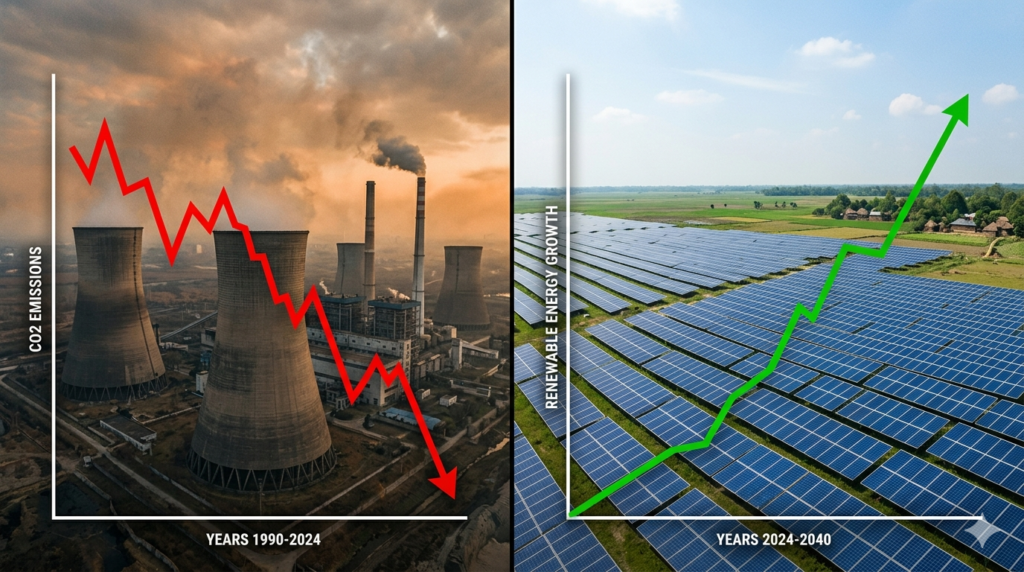
World Bank studies project Bangladesh’s GDP growth could fall by 2–3% by 2050 if climate adaptation is delayed. A separate analysis by Ember and the Climate Vulnerable Forum finds Bangladesh could leapfrog the fossil fuel pathway entirely — using solar, battery storage, and electrification to achieve faster, cheaper, and more secure growth than the conventional energy model. These two reports read together define the choice Bangladesh faces right now: pay for the transition or pay for the consequences.
7,000 Factories, Billions of Litres of Waste. The World Bank Just Approved $370 Million to Start Fixing It.
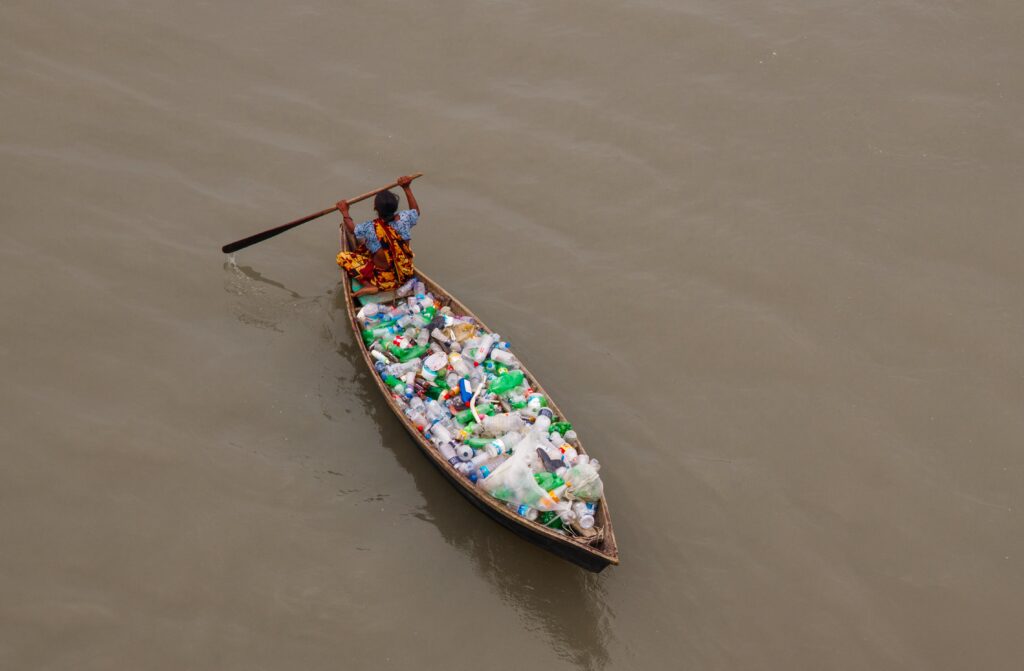
On February 11, the World Bank approved $370 million to address Dhaka’s industrial wastewater and river pollution crisis. The numbers behind that decision: 7,000 factories discharging 2.4 billion litres of untreated wastewater daily into nearby waterways. Only 20% of Dhaka residents connected to sewer networks. Just 2% with access to functional sludge management. The Buriganga River — once Dhaka’s lifeline — is now clinically dead in stretches. This is a water governance emergency with direct consequences for every factory, every export order, and every ESG rating in Bangladesh.
Dhaka Was the World’s Most Polluted City on May 11. This Has Happened Repeatedly. Nobody Is Calling It an ESG Crisis Yet.
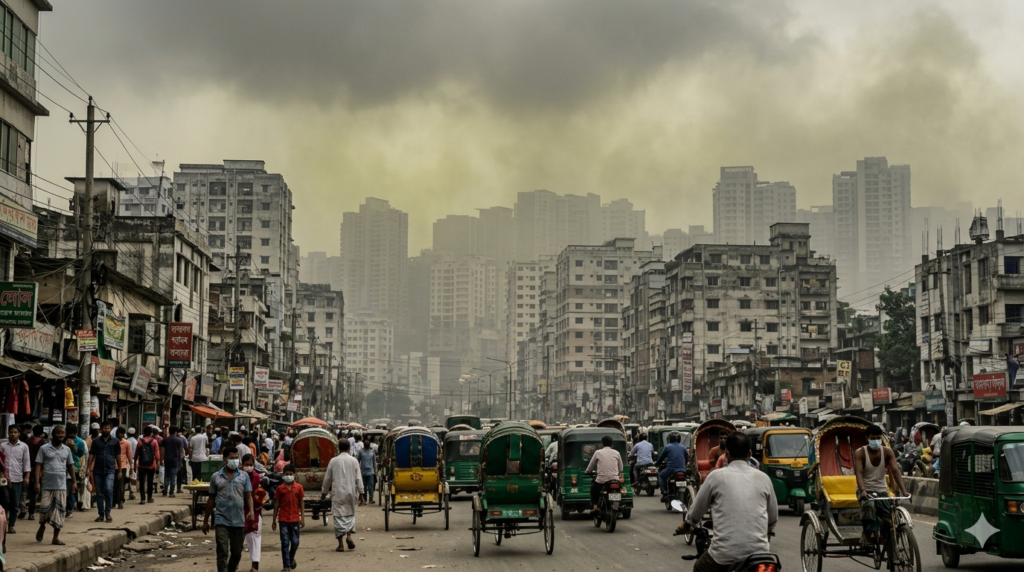
On May 11, Dhaka’s AQI hit 174 — the world’s worst that morning. From May 1 to May 14, Dhaka appeared on IQAir’s most polluted cities list multiple times. Air pollution caused 159,000 premature deaths in Bangladesh in 2019 alone. The World Bank estimates the health and productivity cost at 8.3% of GDP. This is not a weather story. It is a governance failure with a price tag larger than most of Bangladesh’s infrastructure programmes.
Bangladesh Factories Hit 500MW Solar Milestone, Aim to Double it This Year. Built by Brands, Not Bureaucrats📰
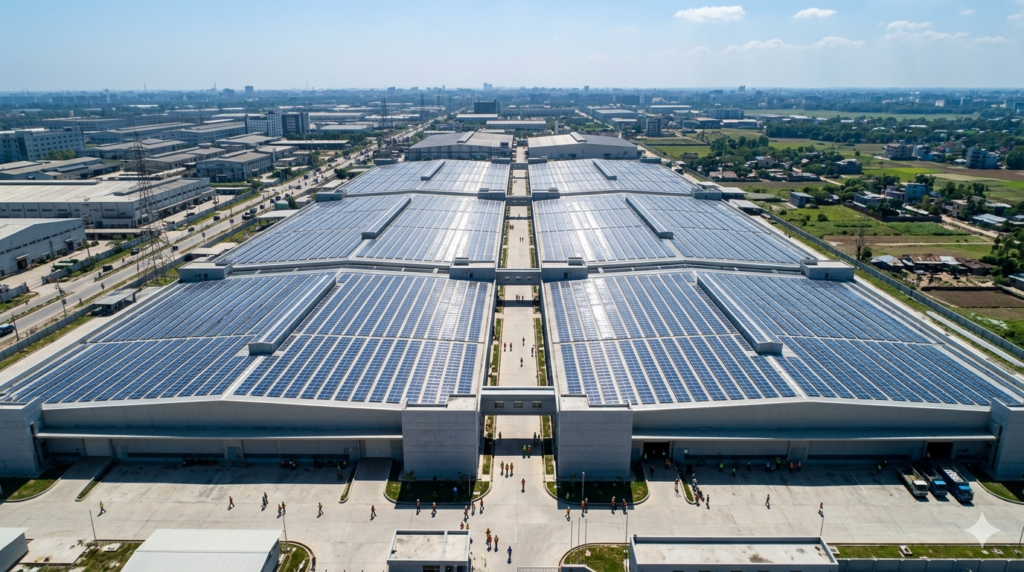
Bangladesh’s industrial factories have crossed 500 megawatts of installed rooftop solar capacity. Solar developers expect another 500 MW to be added before the end of 2026. H&M’s suppliers alone would need 2,000 MW to reach net-zero. The Middle East war that drove up fuel prices accelerated decisions that compliance pressure had already initiated. This is what private sector ESG in action looks like: buyer requirement → factory investment → energy security as a byproduct.
Bangladesh Has Until December to Build Its Circular Textile Strategy. The EU Is Watching and Waiting to See If It Is Real
On April 23, the Ministry of Commerce held a national stakeholder consultation on a draft National Strategy on Circular Economy for Textiles — covering 2026 to 2031. BGMEA, BKMEA, and BTMA all showed up. The EU delegation attended. UNIDO and Chatham House provided technical support. The target: finalise the strategy by end of 2026. Whether this becomes real policy or another archived document is the governance question that defines Bangladesh’s next decade of RMG exports.
Bangladesh Throws Away $8 Billion Every Year. It Calls the Pile ‘Textile Waste
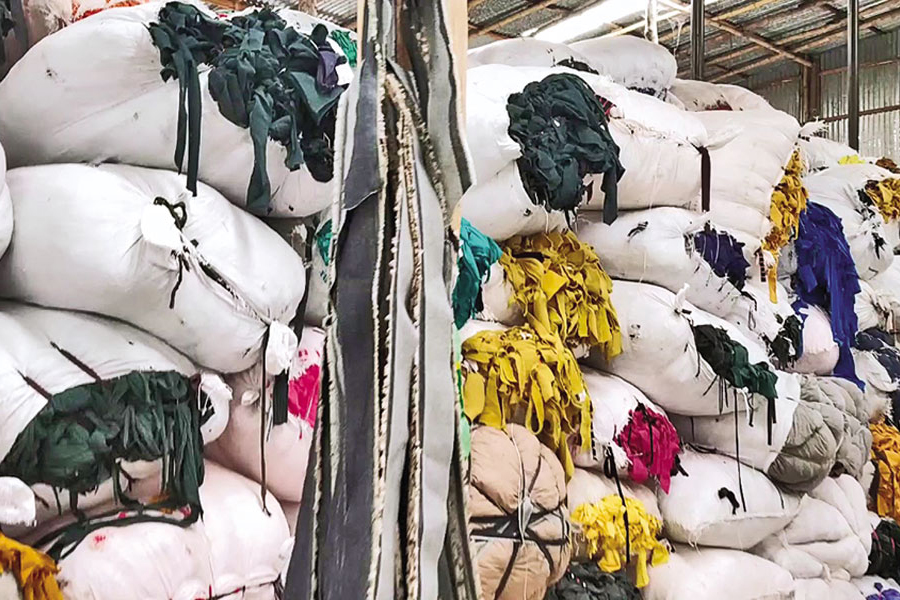
Bangladesh generates 600,000 tonnes of textile waste every year. It currently recycles about 30% of cotton-based scraps. Most of the rest is exported to India and Pakistan for processing — then reimported as recycled yarn at a premium. BGMEA’s own Vice-President puts the missed circular economy opportunity at $8 billion annually. This is not waste. It is money Bangladesh is gifting to its competitors.
World’s Most Certified Garment Sector. Zero Global Visibility. Bangladesh Is Losing Billions in Silence.
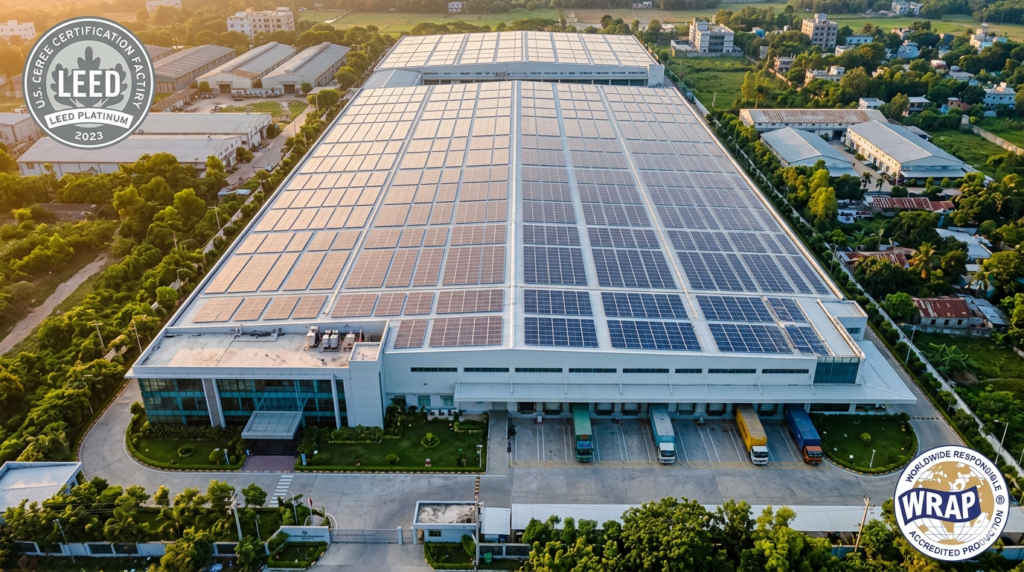
$39.35 billion in exports. 200+ LEED-certified factories — more than any other garment-producing country. 800 WRAP-certified. 350 on Higg Index. 120 ZDHC signatories. 280 Amfori BSCI. Bangladesh’s RMG sector has more verified ESG proof than it is given credit for — by buyers, investors, or its own government. The credentials exist. A national platform to aggregate and communicate them does not. That gap is costing Bangladesh billions.