
Bangladesh Promised 20% Renewable Energy by 2030 – Twice Before, It Failed
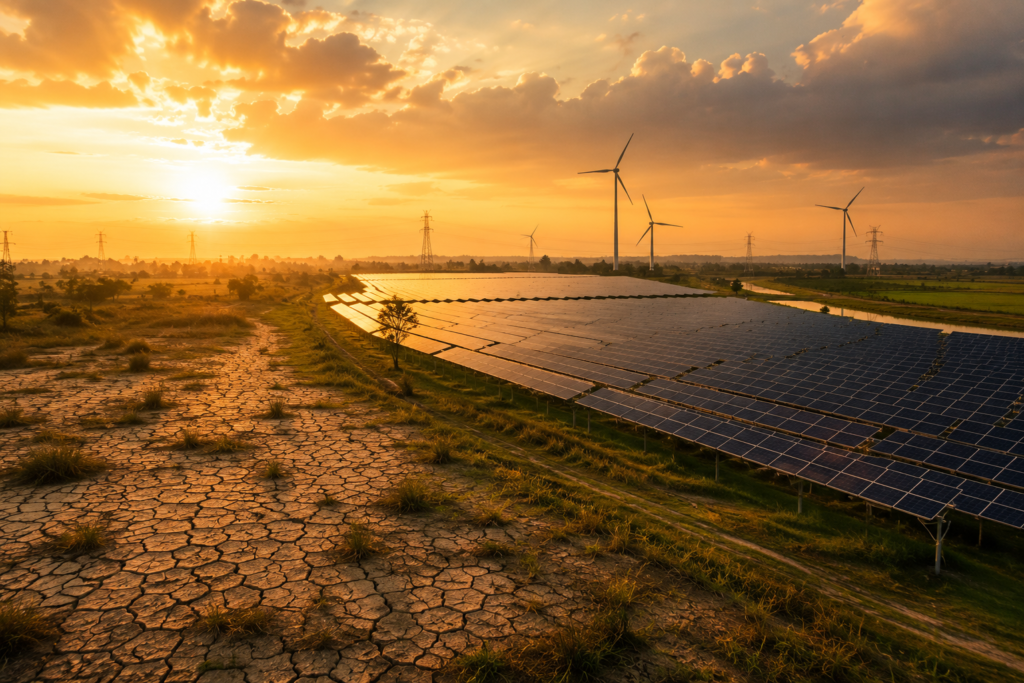
The government’s third renewable energy pledge comes with real tax relief for the first time — but experts say Bangladesh would need to add more clean-power capacity in four years than it built in the last two decades combined. Land, financing, and grid readiness remain the make-or-break variables.
The EU Just Watered Down Its Supply Chain Law – Don’t Relax Yet

Brussels has slashed the reach of its landmark human rights and environmental due diligence law, pushing enforcement to 2029 and shrinking its scope by roughly 70%. For Bangladeshi exporters, the legal net just got smaller — but European buyers are already writing the same expectations into their own contracts.
Bangladesh Just Made ESG Disclosure Mandatory – Is Your Board Ready?

BSEC’s draft Corporate Governance Rules 2026 turn ESG reporting from a nice-to-have into a legal requirement for every listed company, with audit committees now directly on the hook for it. Independent directors face tougher vetting, boards must diversify, and CSR spending can no longer substitute for shareholder returns. For corporate Bangladesh, “sustainability” just became a compliance word.
Bangladesh Lost $1.78 Billion to Heat Last Year. The Bigger Story? We Still Treat Heat Like Weather, Not Economic Risk.

Bangladesh lost an estimated $1.78 billion in GDP due to heat stress in 2024. Yet the country still has no national heat disaster management plan. Heat is no longer just a climate issue—it is becoming an economic governance issue.
Bangladesh Just Won 3 More Years from the UN. The Clock Did Not Stop. In Some Areas, It Just Started Running Faster.
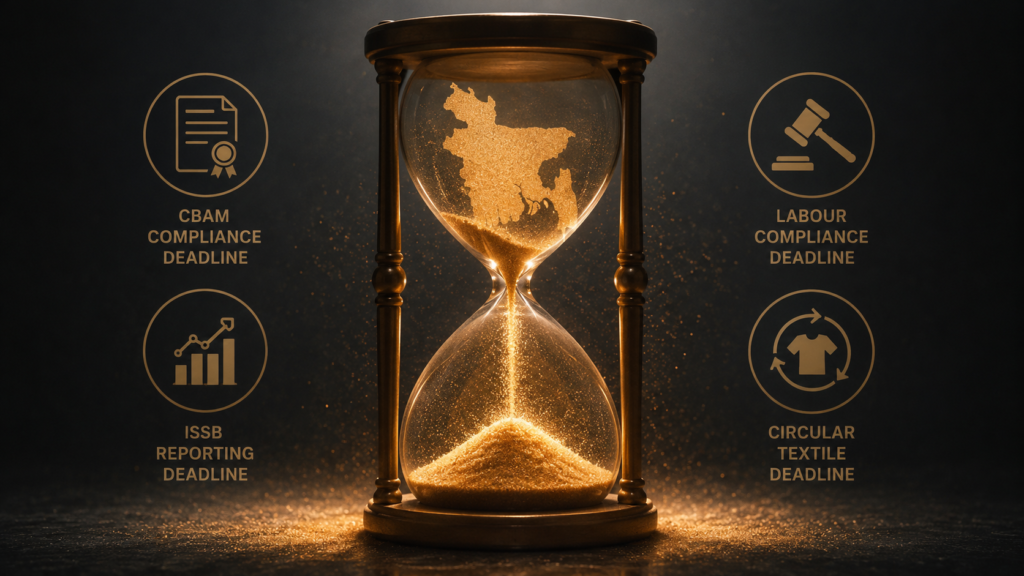
Bangladesh secured a three-year extension for LDC graduation—from November 2026 to November 2029. Many are treating it like relief. That may be the most dangerous interpretation possible. The trade deadline moved. The ESG deadlines did not.
India’s EU trade deal is Bangladesh’s biggest competitive threat in a generation
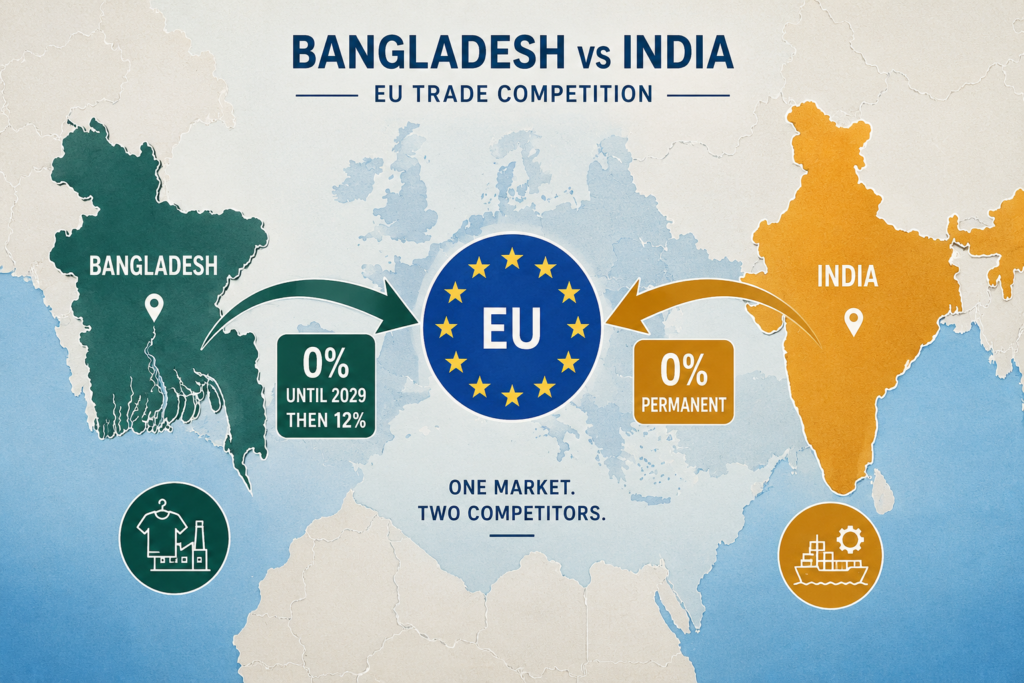
The ‘mother of all deals’ between India and the EU wipes out the 9–12% tariff cushion Bangladesh has relied on for decades. With LDC graduation also coming in November 2026, the tariff clock is ticking on two fronts simultaneously.
Each Bangladeshi garment carries 16 kg of CO₂ and a carbon tax bill nobody is ready for
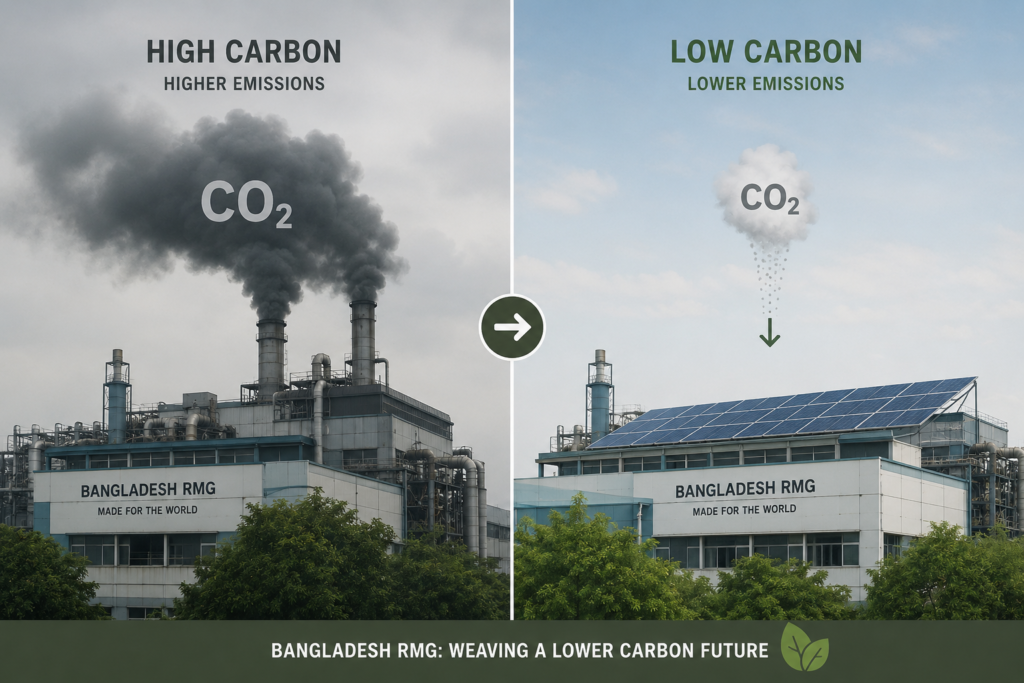
The EU’s Carbon Border Adjustment Mechanism entered its binding financial phase in January 2026. Garments aren’t in scope yet — but the research just published says Bangladesh should start counting now.
Every garment entering Europe needs a digital ID by 2027 — Bangladesh has 18 months
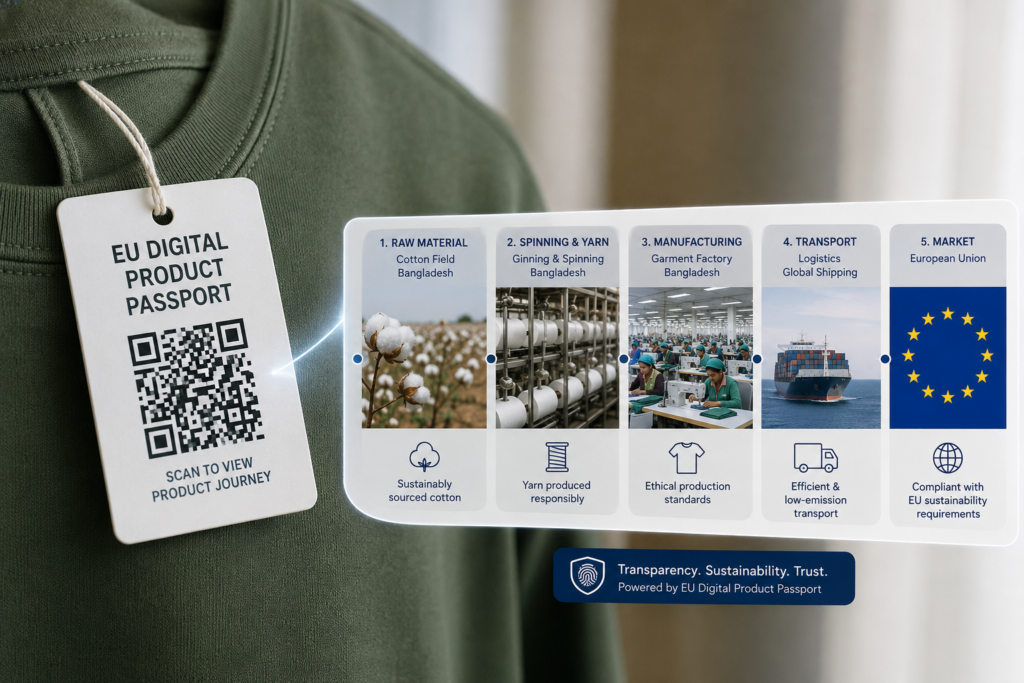
The EU’s Digital Product Passport is not a distant policy experiment. It is a binding requirement that will determine which factories European buyers keep sourcing from. The countdown has started.
AI, logistics, ESG: the three forces reshaping business in post-LDC Bangladesh
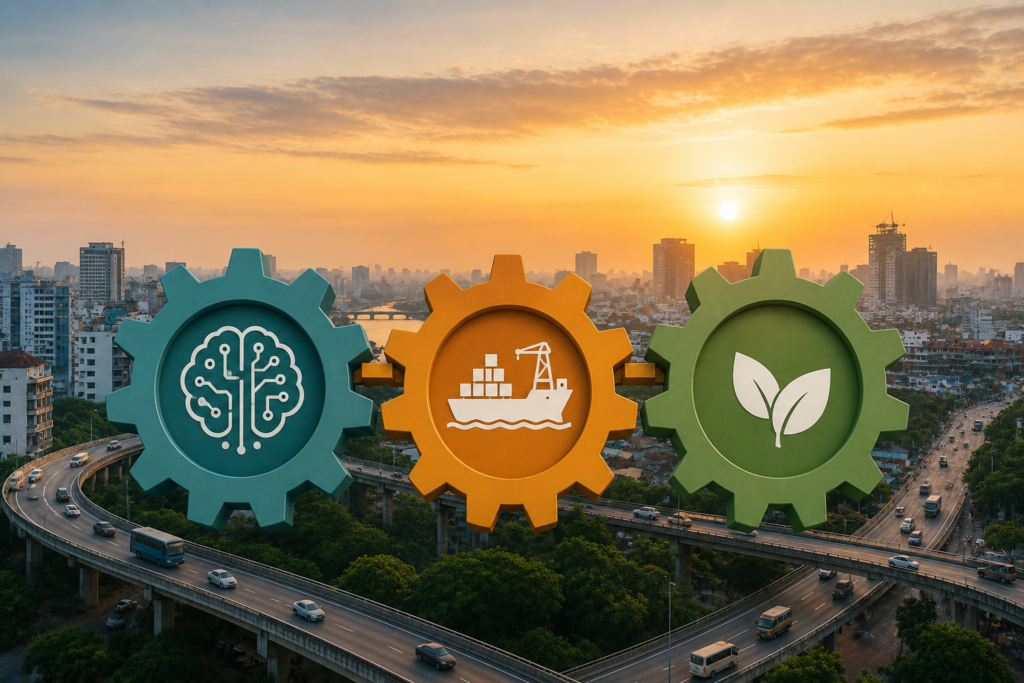
Foreign investors are watching Bangladesh closely. They see a country with real potential — and real gaps. The businesses that align AI adoption, supply chain resilience, and ESG frameworks together will be the ones that attract capital.
Garments built Bangladesh — what comes next is the harder question
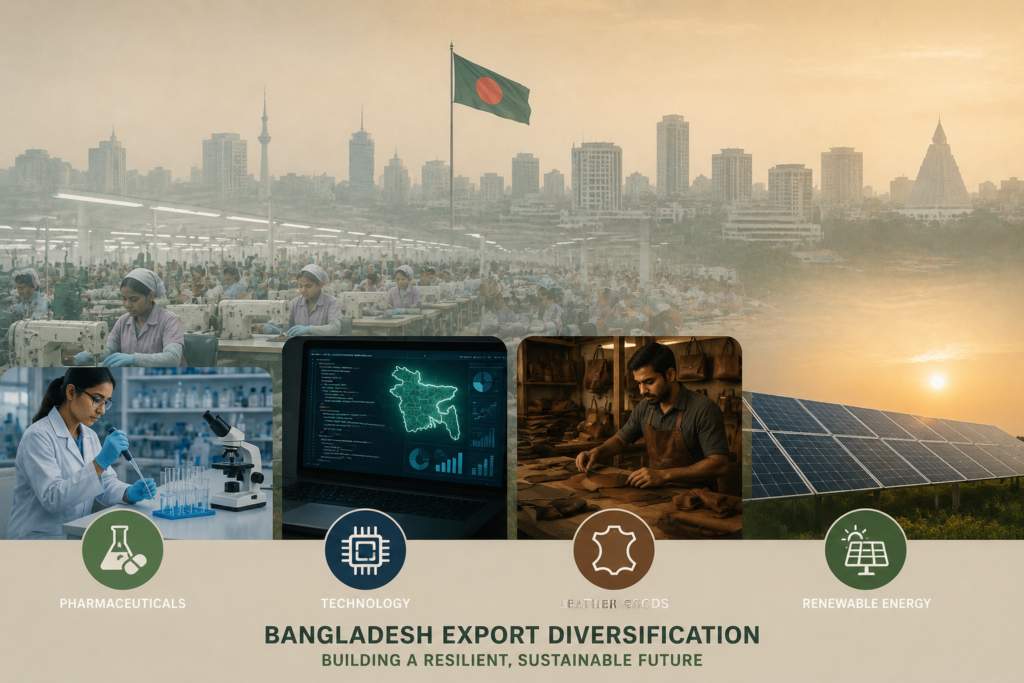
With LDC graduation closing in and trade preferences shrinking, Bangladesh urgently needs its next export champion. Seven sectors show promise. All share one uncomfortable requirement: compliance.